Learn how to pair coffee with breakfast, desserts, cheese and savory foods by matching intensity, sweetness, acidity, roast character and texture.
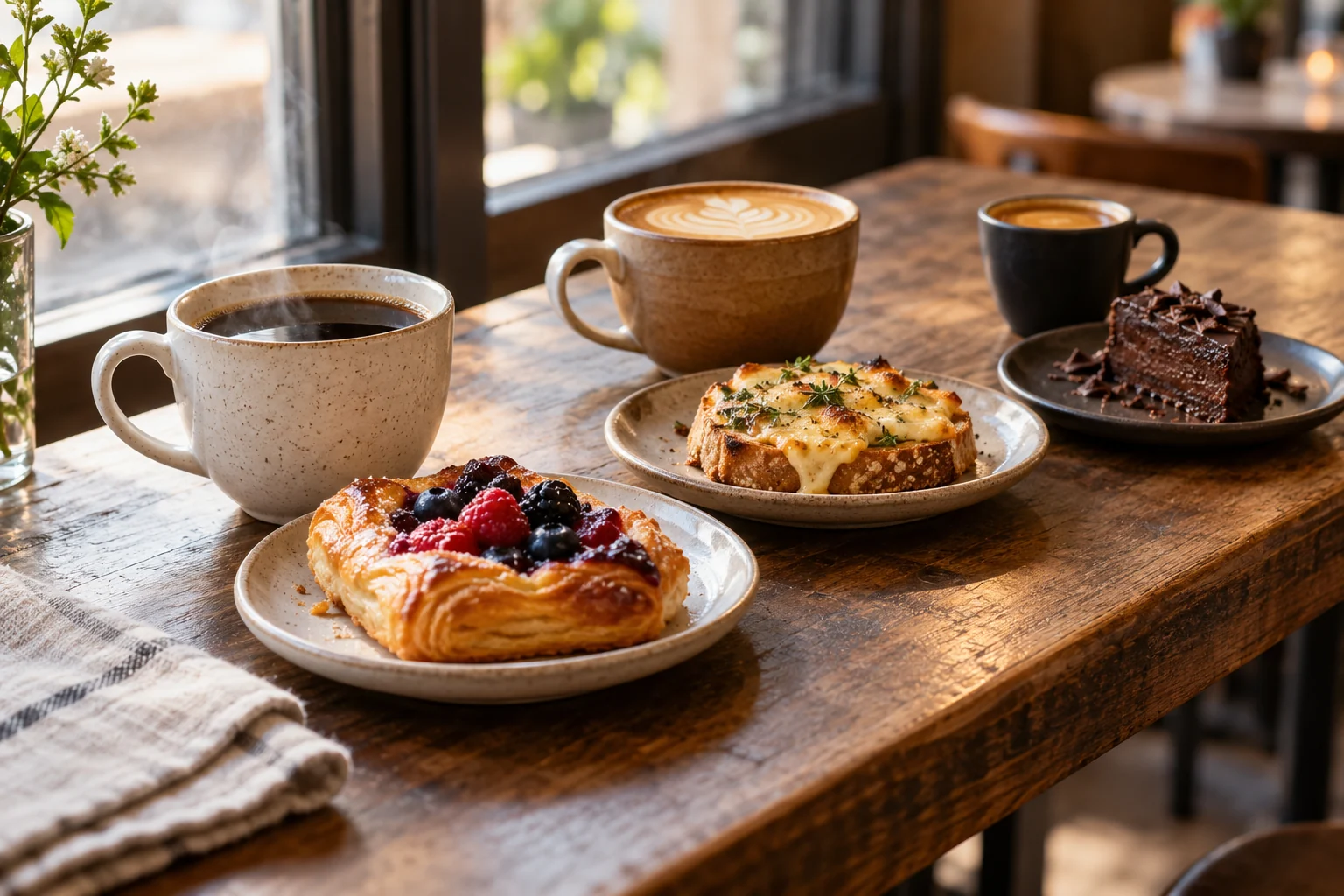
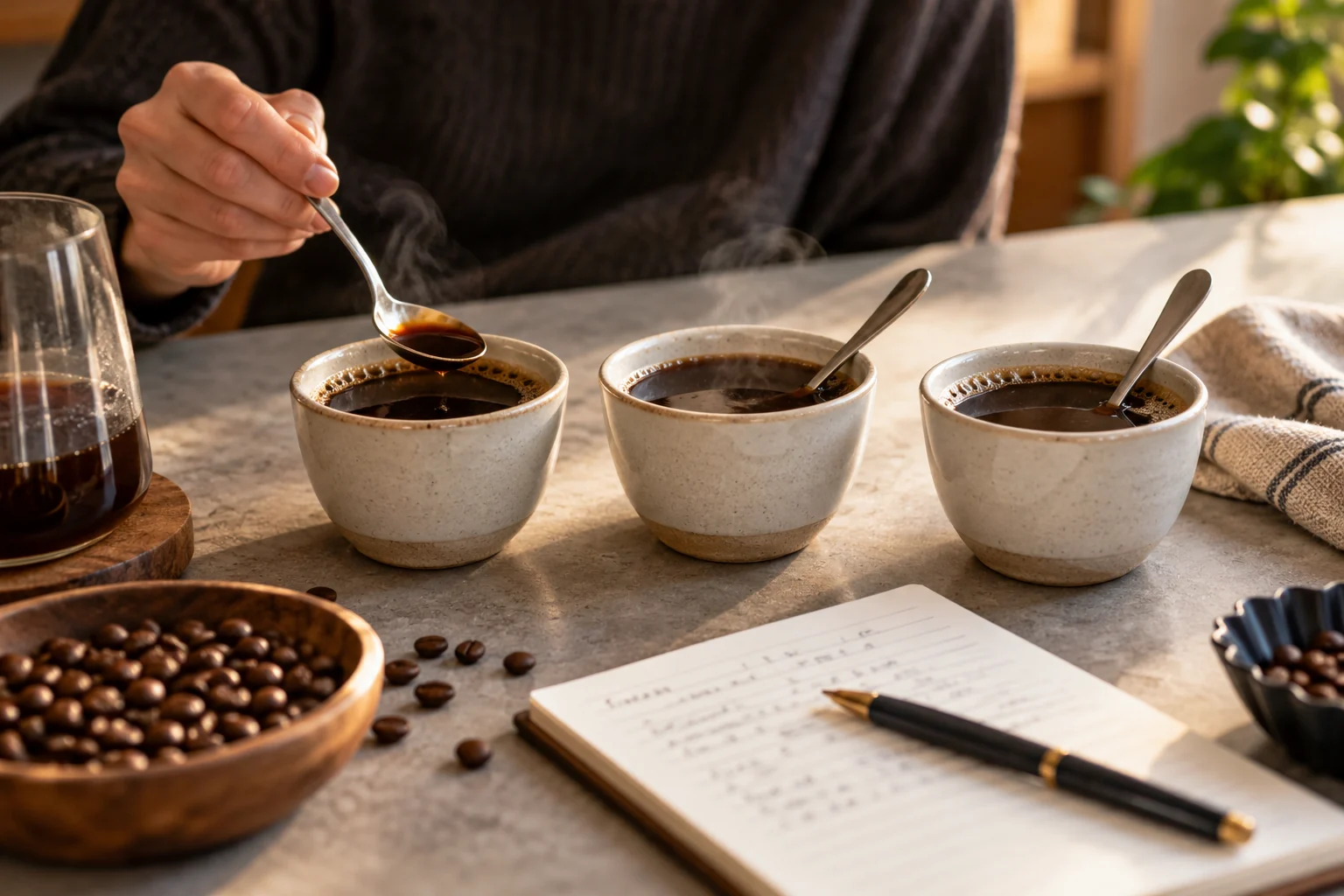
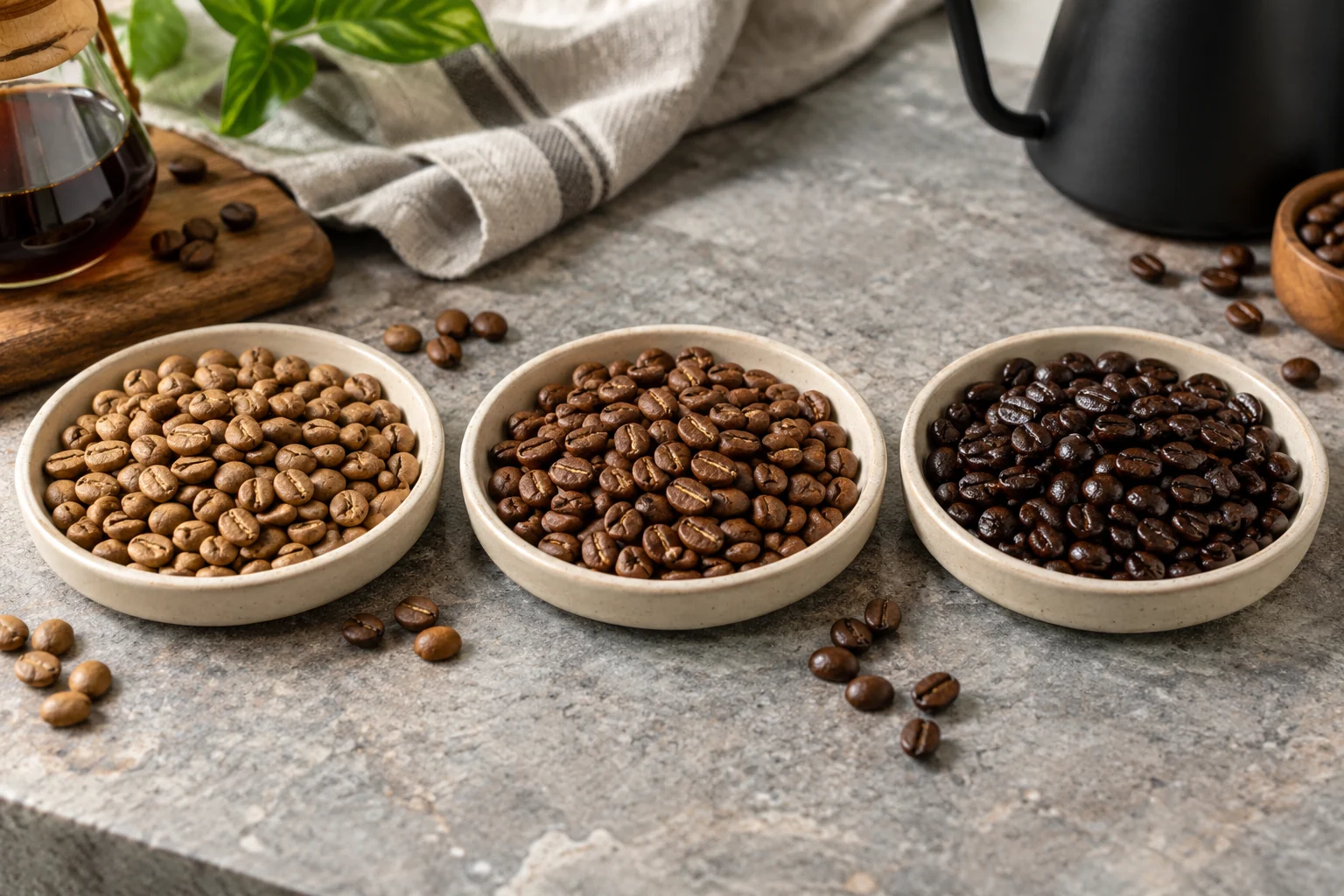
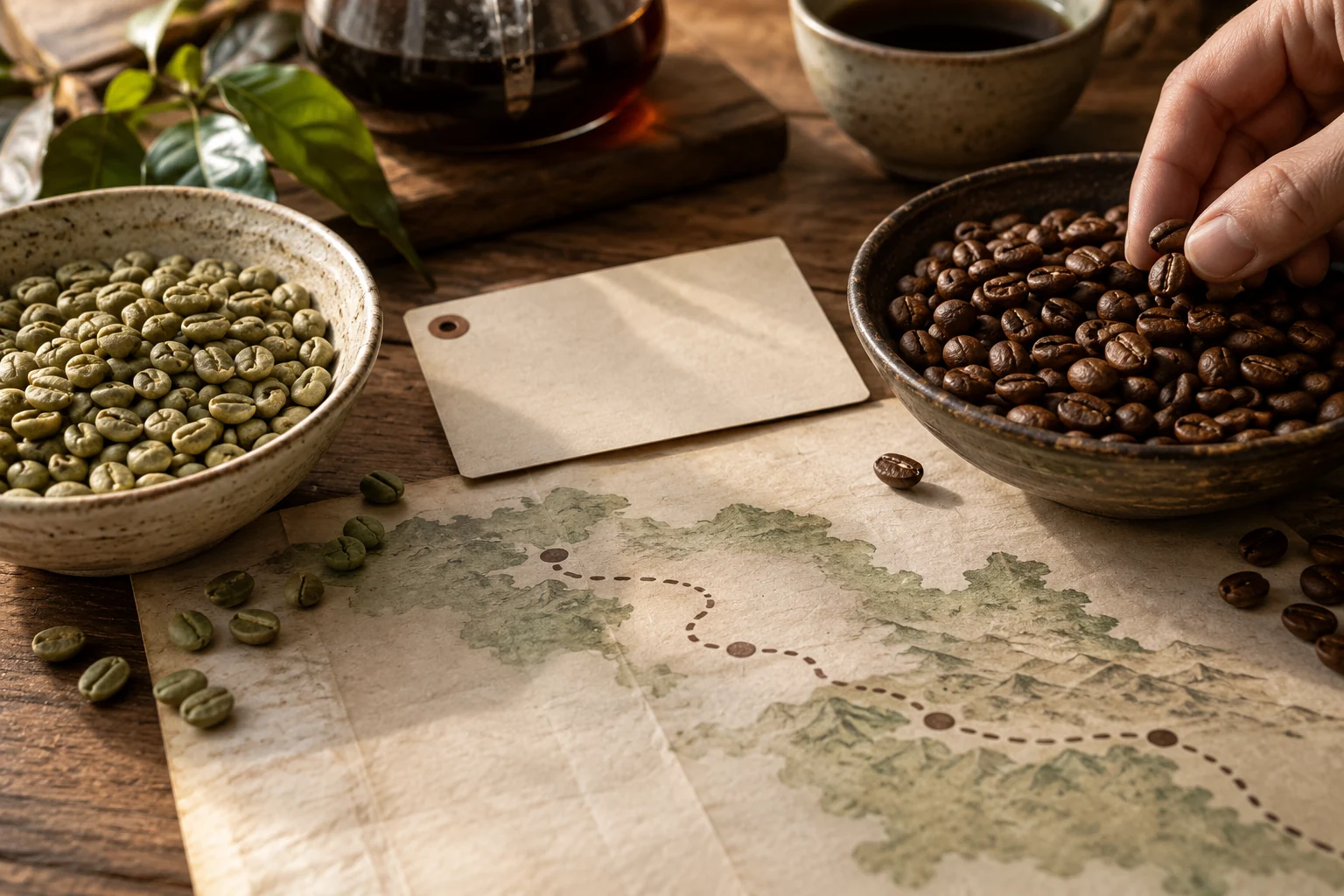
AI-generated editorial illustration.
You do not need a rigid pairing chart to match coffee with food. Start with the coffee’s dominant sensory character, then decide whether you want the food to echo that character or contrast with it. A bright, fruit-forward coffee can lift a buttery pastry or fruit dessert, while a deeper chocolate-and-roast-driven coffee can stand up to richer foods.
The useful question is not “What food always goes with this origin?” It is: What do I actually taste in this cup, and what will the food do to that experience?
That matters because origin names alone are poor shortcuts. Roast level, processing, brewing, water, freshness and extraction can change what reaches the cup.
Start with five things you can actually taste
Professional coffee tasting uses a broad sensory vocabulary. World Coffee Research’s Sensory Lexicon was developed to provide repeatable references for aroma and flavor attributes, and the Specialty Coffee Association’s Coffee Taster’s Flavor Wheel builds on that work.
For home pairing, you can simplify the exercise to five practical questions:
How intense is the coffee? Delicate and tea-like, or dense and roast-forward?
How bright is it? Citrus-like, berry-like or crisp, versus rounded and low in perceived acidity?
How sweet does it seem? Honey, caramel, ripe fruit or chocolate-like impressions?
How heavy is the body? Light and clean, creamy, syrupy or weighty?
What aromas stand out? Floral, fruity, nutty, cocoa-like, spicy, roasted or earthy?
You do not need to identify a perfect tasting note. “Bright and fruity” is enough information to begin pairing.
Use either complement or contrast
Most successful experiments use one of two approaches.
Complement the coffee
Choose food that shares a broad flavor family with the cup.
Examples:
cocoa-forward coffee with chocolate or toasted-nut desserts
fruit-forward coffee with berry, citrus or stone-fruit pastries
caramelized coffee flavors with browned butter, toffee or baked pastry
spice-like coffee notes with cinnamon, cardamom or warm baking spices
The goal is not to make both items taste identical. It is to let a familiar flavor bridge connect them.
Contrast the coffee
Use one item to provide what the other lacks.
Examples:
bright coffee against buttery or creamy food
crisp coffee alongside a rich breakfast dish
bittersweet espresso beside a sweet dessert
clean, lighter-bodied coffee with a dense pastry
Contrast can make individual qualities easier to notice, but extreme contrast can also make one item seem harsh or flat. Taste both ways and decide for yourself.
Match intensity before you obsess over tasting notes
A subtle coffee can disappear beside a strongly seasoned or very sweet dish. A heavily roasted coffee can overwhelm a delicate pastry.
bold coffee → richer or more intensely flavored food
This is more dependable than assuming every coffee from one country needs the same food.
Coffee and breakfast pairings
Breakfast gives you several easy ways to experiment because it combines fat, sweetness, toastiness and fruit.
Light or bright coffee
Try it with:
croissants or lightly buttered pastry
lemon loaf
fruit Danish
yogurt with fruit
simple toast with preserves
A brighter cup can keep buttery foods from feeling as heavy, while fruit-driven aromas can connect naturally with fruit fillings.
Balanced medium-roast coffee
Try it with:
pancakes or waffles
banana bread or nut bread
breakfast sandwiches
eggs and toast
oatmeal with nuts
Medium roasts often sit in a flexible zone between brightness and roast character, which makes them useful when breakfast has both savory and sweet elements.
Darker or roast-forward coffee
Try it with:
chocolate pastry
richer egg dishes
smoky breakfast foods
heavily toasted bread
cinnamon rolls
The stronger roast character is less likely to disappear beside intense flavors.
Coffee and dessert pairings
Dessert is where coffee pairing is easiest to understand because sweetness changes the way bitterness, acidity and roast character are perceived.
Chocolate desserts
Instead of automatically choosing the darkest coffee available, compare the dessert’s intensity.
milk-chocolate dessert can work with nutty, caramelized medium roasts
dark chocolate can stand up to espresso or darker roast character
chocolate plus fruit can be interesting with fruit-forward coffee
If the dessert is much sweeter than the coffee, the coffee may seem more bitter after a bite. That is not necessarily a bad pairing, but it is worth noticing.
Fruit desserts
Fruit tarts, berry pastries and citrus desserts are useful with coffees that already show fruit, floral or bright aromatic qualities.
Try a washed, bright coffee next to a lemon tart, then try the same tart with a darker roast. The comparison will teach you more than a memorized list.
Creamy desserts
Cheesecake, panna cotta, custard and ice cream bring fat and sweetness. Espresso or concentrated coffee can provide useful contrast, while softer medium-roast profiles can create a more blended pairing.
Coffee with cheese and savory food
Coffee does not have to stay at breakfast or dessert.
For cheese, start by matching intensity:
mild fresh cheese with lighter coffee
nutty aged cheese with caramelized or nutty coffee
stronger washed-rind or blue cheese with a coffee that has enough body to remain noticeable
For savory foods, pay attention to roast, browning, smoke, spice and fat.
A medium roast with toast, roasted vegetables or browned cheese can share similar roasted-aroma families. A brighter coffee can provide contrast against richer foods.
This is an area where personal preference matters enormously. Treat suggestions as experiments, not rules.
Cold brew changes the pairing
Cold brew is not simply hot coffee served cold. Different brewing conditions can produce a different sensory balance, and serving temperature changes aroma release and perception.
Cold brew often works well with:
chocolate desserts
vanilla desserts
nuts
salty snacks
grilled or roasted foods
If your cold brew is fruit-forward rather than chocolate-heavy, try it with fruit desserts instead of forcing the usual brownie pairing.
The base coffee may be similar, but concentration and milk change the experience.
Espresso
Concentrated flavor makes espresso useful beside small, rich foods: dark chocolate, biscotti, dense cake or a small pastry.
Americano
Dilution lowers concentration and increases volume, so an Americano can sit more comfortably through breakfast or a longer meal.
Latte
Milk changes sweetness, body and texture. A latte can pair naturally with pastry, spice-forward baked goods and softer desserts because the drink itself is already creamy.
It is tempting to write rules such as “Ethiopian coffee goes with citrus” or “Brazilian coffee goes with chocolate.” Those shortcuts can be useful as examples, but they are not guarantees.
Coffee from the same country can vary because of:
species and variety
region and elevation
harvest conditions
processing method
roast profile
brewing method
extraction
Taste the actual coffee first.
If you want to learn how origin can affect what you notice, our single-origin coffee guide explains the role of place.
A simple three-step pairing exercise
You can run a useful pairing test with one coffee and three foods.
Step 1: Taste the coffee alone
Write down only three impressions, such as:
bright
cocoa-like
light-bodied
Step 2: Taste a contrasting food and a complementary food
For example:
buttery croissant for richness/contrast
dark chocolate for a shared cocoa family
Step 3: Taste the coffee again after each bite
Ask:
Does the coffee seem brighter or flatter?
More bitter or sweeter?
Does the aroma seem stronger?
Does the food dominate?
Do you want another bite and sip together?
That final question matters. A technically clever pairing is not useful if you do not enjoy it.
Build your own pairing notes
A short journal will teach you faster than trying to memorize dozens of combinations.
Track:
coffee and roast level
brew method
broad sensory notes
food
what changed after the bite
whether you would repeat the pairing
Use the same coffee with different foods or the same food with different coffees. Controlled comparisons make patterns easier to notice.
Pair coffee with food by matching intensity first, then use either complement or contrast. Taste the actual cup rather than relying on a country name or roast label, and treat every pairing recommendation as a starting experiment.
Bright coffee can lift rich food. Roast-forward coffee can stand up to dense desserts. Creamy drinks can blend with pastry. Concentrated espresso can contrast with sweetness.
The best pairing is the one that makes you notice something enjoyable in both the coffee and the food.
Learn what light, medium, and dark coffee roasts actually mean, how roast level changes flavor, and how to choose the right roast for the way you brew.
Learn what single-origin coffee really means, how country, region, farm and lot traceability differ, and why single origin is not automatically better than a blend.