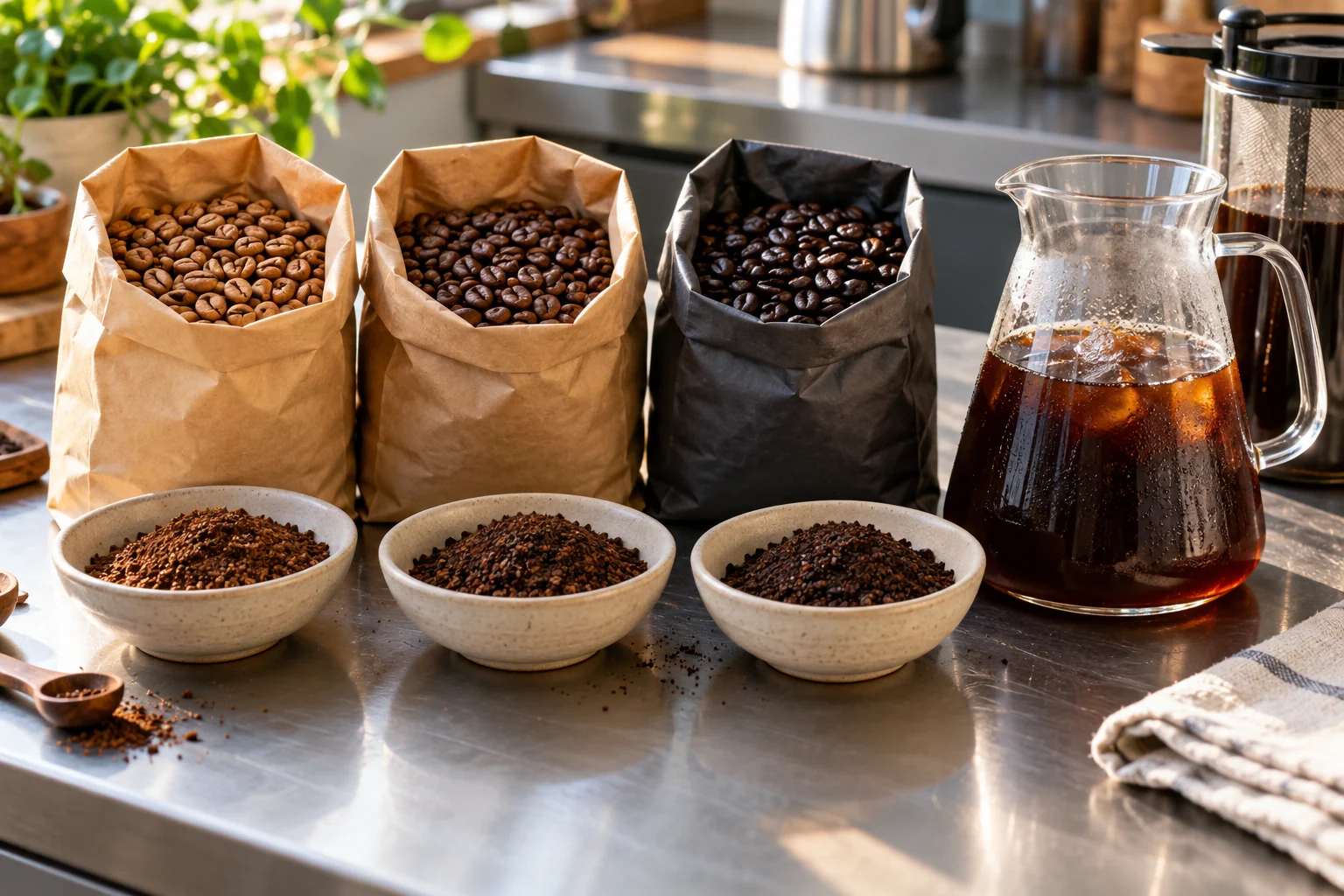
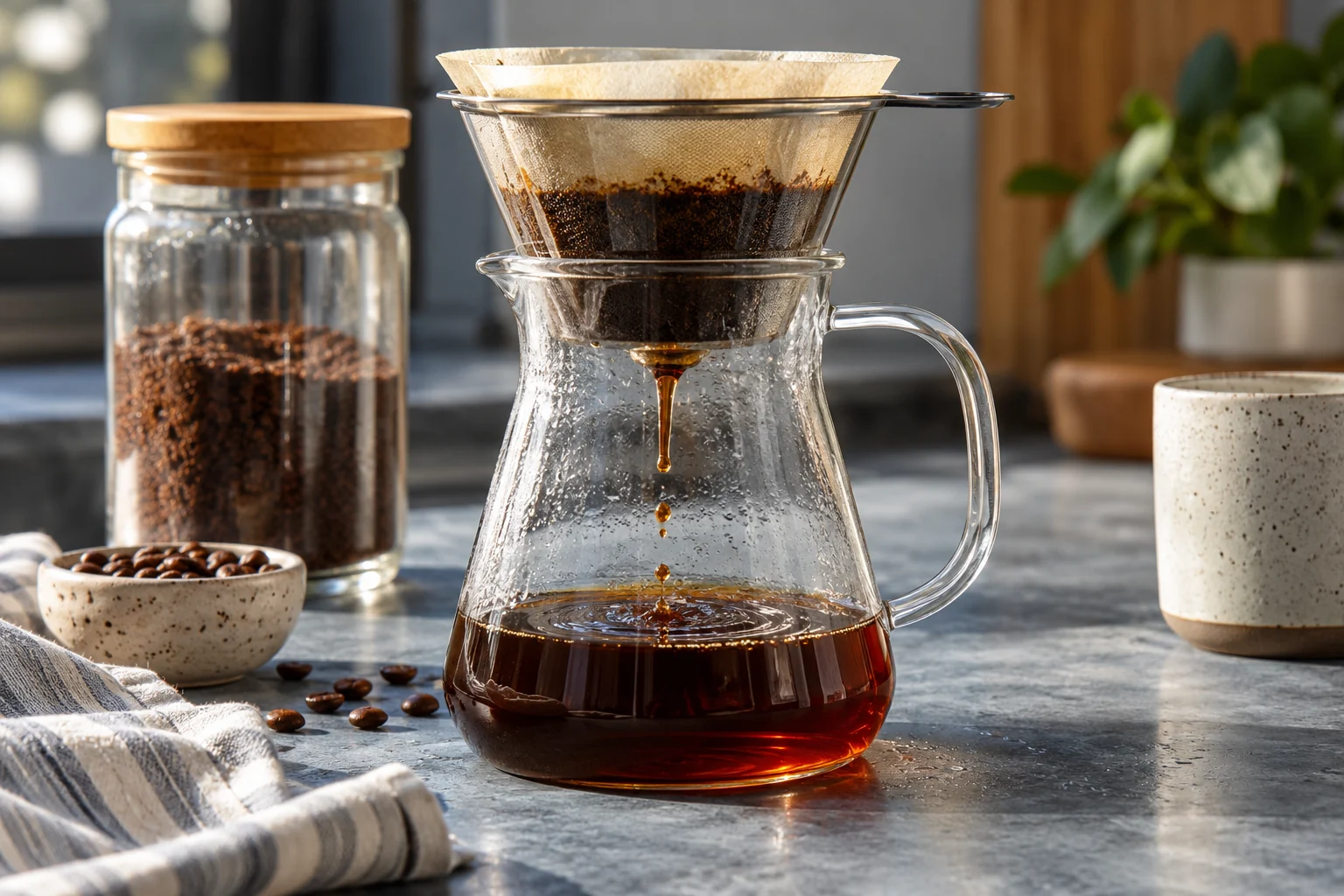
Cold brew is coffee extracted with cool or cold water over a much longer contact time than ordinary hot brewing. The simplest reliable home method is immersion: combine coarsely ground coffee with water, steep it cold, filter it well, then dilute to taste if you made a concentrate.
You do not need 24 hours, a special tower, or an expensive brewer to make good cold brew.
You do need to control four things:
- coffee-to-water ratio
- grind and filtration
- contact time
- temperature and refrigerated storage
Once those variables are consistent, cold brew becomes easy to repeat and adjust.
Cold brew is not the same as iced coffee
Iced coffee is usually brewed hot and then chilled or poured over ice.
Cold brew is extracted primarily with cool or cold water.
That lower extraction temperature changes how quickly different compounds move from the coffee into the water. Because the process is slower, cold brew commonly uses hours of contact time rather than minutes.
The result can taste smoother, rounder, less aromatic in some dimensions, and more chocolatey or muted in others depending on the coffee and recipe.
But do not repeat the internet claim that cold brew is automatically “low acid.” One controlled study found that hot and cold brews could have comparable pH and chlorogenic-acid concentrations under the conditions tested. Perceived smoothness is not the same thing as a guaranteed large drop in chemical acidity.
A simple starting recipe
For a ready-to-drink cold brew rather than a heavy concentrate, start around:
- 1 part coffee to 12 parts water by weight
- coarse to medium-coarse grind
- refrigerated immersion
- about 12–16 hours as a practical first trial
Example:
- 80 g coffee
- 960 g water
Combine, refrigerate, filter, taste.
If it is too strong, dilute in the glass.
If it is too weak, use more coffee next time rather than steeping indefinitely.
For a concentrate, many brewers use stronger ratios such as roughly 1:6 to 1:8, but there is no universal definition of “concentrate.” Treat the ratio as part of the recipe and label it clearly so you know whether the finished liquid is meant to be diluted.
Why weighing coffee and water helps
Volume measurements introduce avoidable variation.
A “cup” of coffee grounds can change dramatically depending on grind size, roast, and how densely the coffee settles.
A kitchen scale lets you reproduce the same ratio.
That matters because cold brew has fewer obvious visual cues than pour-over. If your result changes from batch to batch, you want to know whether the difference came from coffee, ratio, grind, time, or temperature — not from an inconsistent scoop.
What grind size should you use?
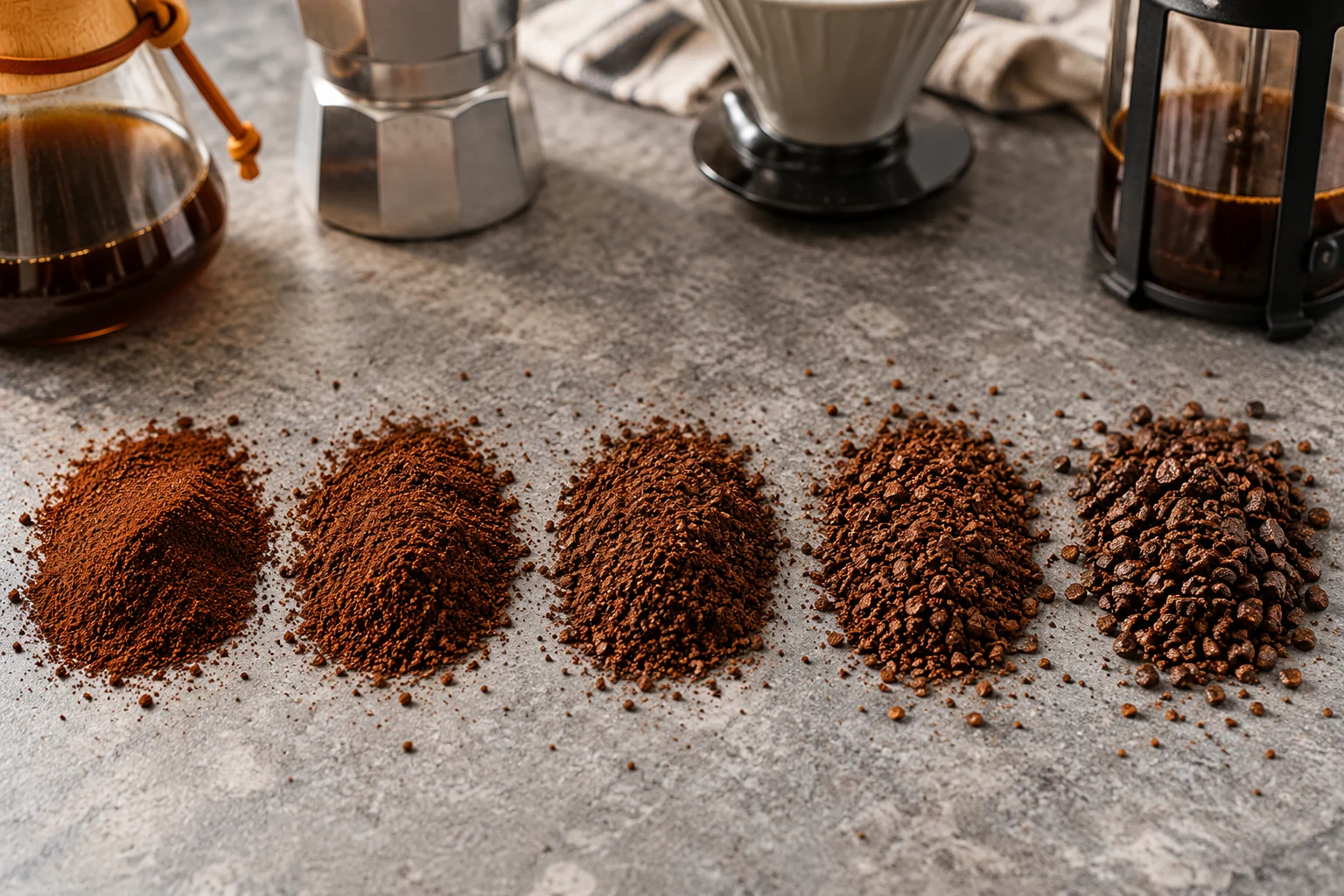
A coarse to medium-coarse grind is a useful starting point for immersion cold brew because it filters cleanly and is less likely to create large amounts of sediment.
But “coarse” is not a magic flavor setting.
Scientific work on cold-brew extraction shows that grind size interacts with other variables and does not always change equilibrium concentrations as dramatically as simple surface-area explanations suggest. Grind still matters practically because it affects extraction rate, bed behavior, sediment, and filtration.
If your brew tastes thin even at a sensible ratio and time, try a modestly finer grind.
If it is muddy, harsh, or extremely difficult to filter, try coarser.
For more on why grind is a control variable rather than a fixed chart, see Find the Right Grind Size for Your Coffee Brewing.
How long should cold brew steep?
The common answer is “12 to 24 hours,” but the science is more interesting than that rule of thumb.
Research published in Scientific Reports found that caffeine and 3-chlorogenic acid in the tested room-temperature cold brews approached equilibrium at roughly 6–7 hours, with little additional increase from much longer contact for those measured compounds.
A separate pilot study found that extraction time depended strongly on temperature and agitation: at room temperature, more than about seven hours was often unnecessary under the study conditions, while colder refrigerator extraction could take longer.
That does not mean every cold brew tastes best at seven hours.
Flavor is more than caffeine and chlorogenic acid, and cold refrigerator brewing proceeds more slowly than warmer extraction.
The practical lesson is:
Do not assume longer is automatically better.
Start with a controlled window, taste, and adjust.
Refrigerator vs. room-temperature steeping
For home brewing, refrigerator extraction is the simplest conservative choice because it gives you cold storage throughout the process.
Room-temperature extraction can work, and much cold-brew research uses or compares it, but you should not treat cold brew as a shelf-stable beverage simply because it contains coffee.
Food-safety research has shown that pathogens can survive in cold-brew coffee under some conditions, and commercial producers use validated controls that are not part of a normal home kitchen.
For a home batch:
- use clean equipment
- start with potable water
- steep in the refrigerator when practical
- filter with clean equipment
- return the finished brew to refrigeration promptly
- make manageable batches rather than trying to store homemade cold brew for weeks
Do not can, vacuum-seal, or store homemade cold brew at room temperature as though it were commercially shelf stable.
Is 24 hours too long?
Sometimes.
Long contact time can make a cold brew taste woody, bitter, flat, or over-extracted depending on coffee, temperature, grind, and ratio.
One cold-brew extraction study noted that prolonged brewing can continue pulling slower-extracting compounds even after caffeine and chlorogenic acid have largely leveled off.
If your 24-hour batch tastes heavy or dull, shortening the steep may improve it.
Do not diagnose every strong flavor as “over-extraction,” though. A very concentrated recipe may simply need dilution.
What roast works best for cold brew?
There is no single best roast.
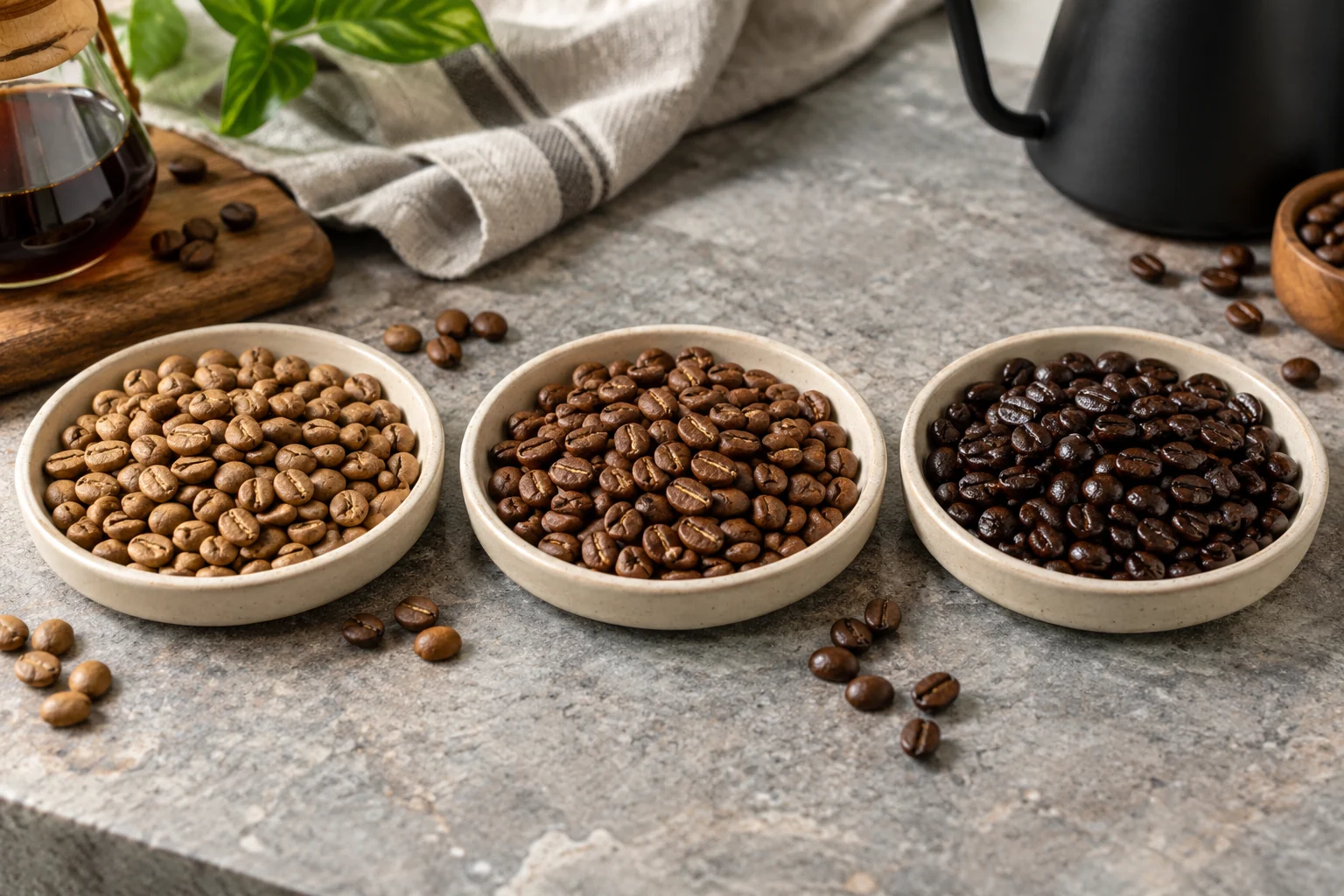
Dark roasts are popular because they can produce familiar chocolate, caramelized, roasted, and bittersweet profiles that remain recognizable when served cold or with milk.
Medium roasts can retain more fruit and origin character while still giving enough body for cold service.
Lighter roasts can work, but they may taste very different from the bright aromatic cup you get from hot pour-over because cold extraction emphasizes a different balance of compounds.
Our separate guide on choosing coffee beans for cold brew goes deeper into roast, origin, and flavor selection.
For the bigger picture, see Understanding Coffee Roasting Levels.
Does cold brew have more caffeine?
It can, but there is no universal answer.
Cold brew is often served from a concentrate, and recipes may use much more coffee per ounce of water than ordinary hot brewing. That can raise the caffeine in the concentrate.
But your final drink may be diluted with water, milk, or ice.
Published cold-brew research also shows that extraction changes with roast, time, temperature, grind, and ratio.
So “cold brew has more caffeine” is incomplete without knowing the recipe and serving size.
If caffeine matters to you, compare the actual dose of coffee and finished volume rather than relying on the label “cold brew.”