Coffee · Oct 7, 2024

Coffee Tasting for Beginners: Aroma, Acidity, Body & Flavor

Learn to taste coffee by comparing aroma, acidity, sweetness, bitterness, body, finish and flavor with a simple, repeatable beginner method.

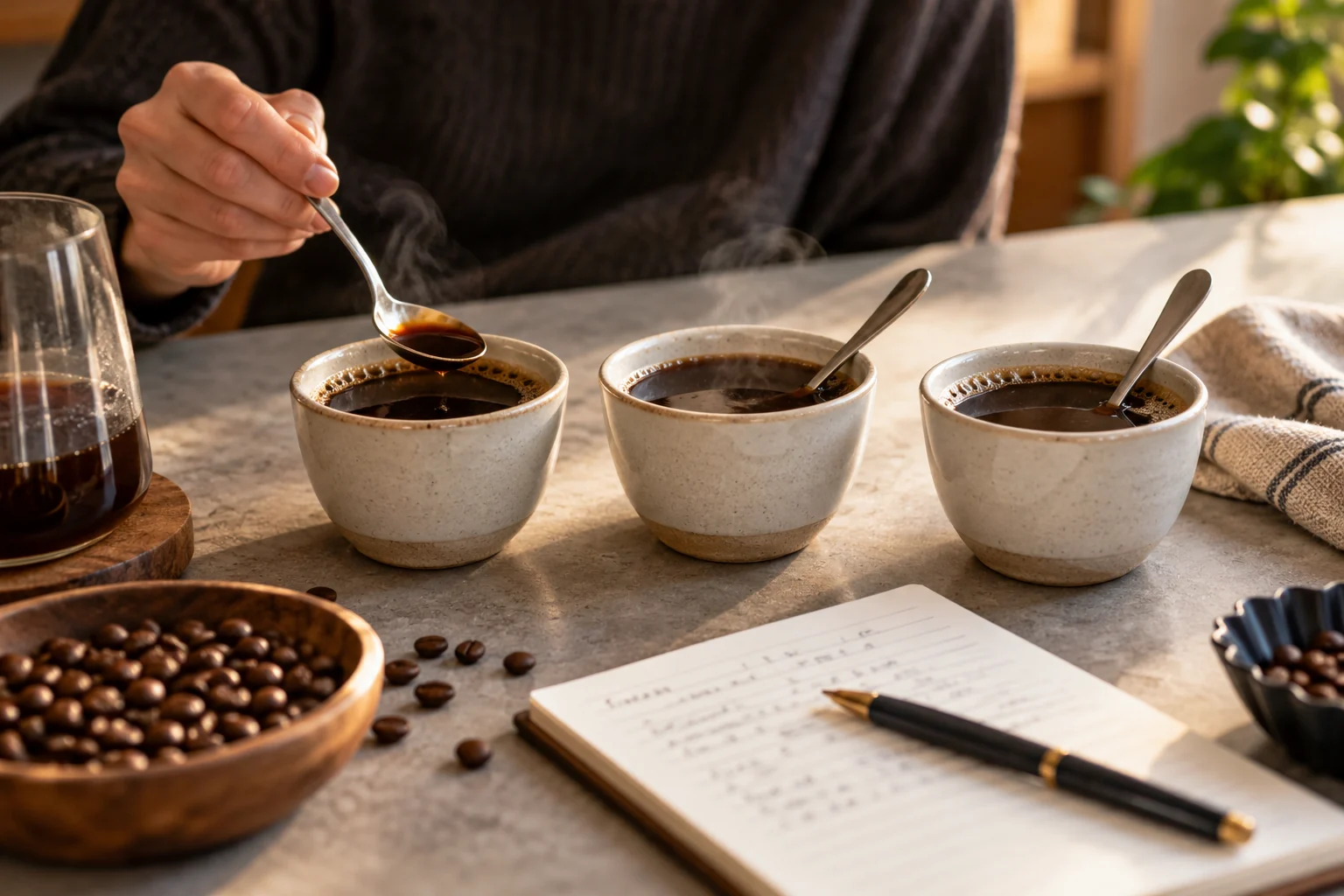
Three steaming coffee tasting cups with spoons and a handwritten note card arranged on a neutral table.
AI-generated editorial illustration.

You do not need a professional palate to taste coffee more deliberately. Start by comparing broad sensory qualities you can actually notice — aroma, sweetness, acidity, bitterness, body, finish, and familiar flavor associations — instead of trying to guess exotic tasting notes on command.

The fastest way to improve is to taste two coffees side by side under similar brewing conditions and describe what is different.

There is no score you need to earn and no correct list of poetic words.

Tasting is comparison, not performance

A tasting note such as “red apple” does not mean the coffee contains apple flavoring or that every drinker must identify apple.

It means the aroma or taste reminded the taster of a reference they associate with red apple.

People differ in sensory memory, cultural food references, sensitivity, and vocabulary.

Professional tools such as the World Coffee Research Sensory Lexicon help trained tasters use common references, but beginners do not need to memorize 110 attributes before enjoying coffee.

Start with differences you can confidently perceive.

The seven things to notice first

1. Aroma

Smell the dry grounds, then the brewed coffee.

Ask whether the aroma feels:

  • floral
  • fruity
  • nutty
  • cocoa-like
  • caramelized
  • spicy
  • roasted
  • earthy
  • smoky
  • fermented

Do not force specificity. “Fruit-like” is a useful observation even if you cannot name the fruit.

2. Sweetness

Coffee contains no added sugar unless you put it there, but a well-balanced cup can still create an impression of sweetness.

You might associate it with:

  • caramel
  • honey
  • ripe fruit
  • brown sugar
  • chocolate

Sweetness often becomes easier to perceive as the coffee cools.

3. Acidity

In coffee tasting, acidity usually describes a lively, bright, or juicy sensation rather than simply a laboratory pH number.

You might compare it to:

  • citrus brightness
  • apple-like crispness
  • berry-like juiciness
  • wine-like tartness

Good acidity can make coffee feel vivid. Excessive or unbalanced sourness can signal under-extraction or simply a coffee/style you do not enjoy.

4. Bitterness

Some bitterness is normal in coffee.

Dark roasting, prolonged extraction, water temperature, grind, brew method, and the coffee itself can all affect bitterness.

The question is not “Is there bitterness?” but “Does it balance the rest of the cup?”

5. Body

Body is how the coffee feels in your mouth.

Useful beginner words include:

  • light
  • tea-like
  • silky
  • creamy
  • syrupy
  • heavy

Body is not the same as flavor intensity.

A coffee can be aromatic and flavorful while still feeling light.

6. Finish

Notice what remains after you swallow.

Does the flavor disappear quickly?

Does sweetness linger?

Does bitterness build?

Does a floral, cocoa, fruit, or roast note remain?

The finish can reveal differences that were hard to notice during the first sip.

7. Balance

Balance is how the elements work together.

A bright coffee can still be balanced if sweetness and aroma support its acidity.

A dark coffee can still be balanced if bitterness does not overwhelm everything else.

“Balanced” does not mean neutral or boring.

Taste coffee as it cools

Temperature changes what you can perceive.

Very hot coffee can mute some sensory detail and make it difficult to separate sweetness, acidity, and aroma.

Taste the same cup at several temperatures:

  1. hot but comfortable
  2. warm
  3. near room temperature

You may discover fruit, sweetness, bitterness, or defects that were less obvious at the beginning.

Professional coffee evaluation also observes coffees as they cool rather than judging one scorching-hot sip.

Compare two coffees instead of tasting one in isolation

Side-by-side comparison is one of the easiest ways to build sensory memory.

Try two clearly different coffees:

  • light vs. dark roast
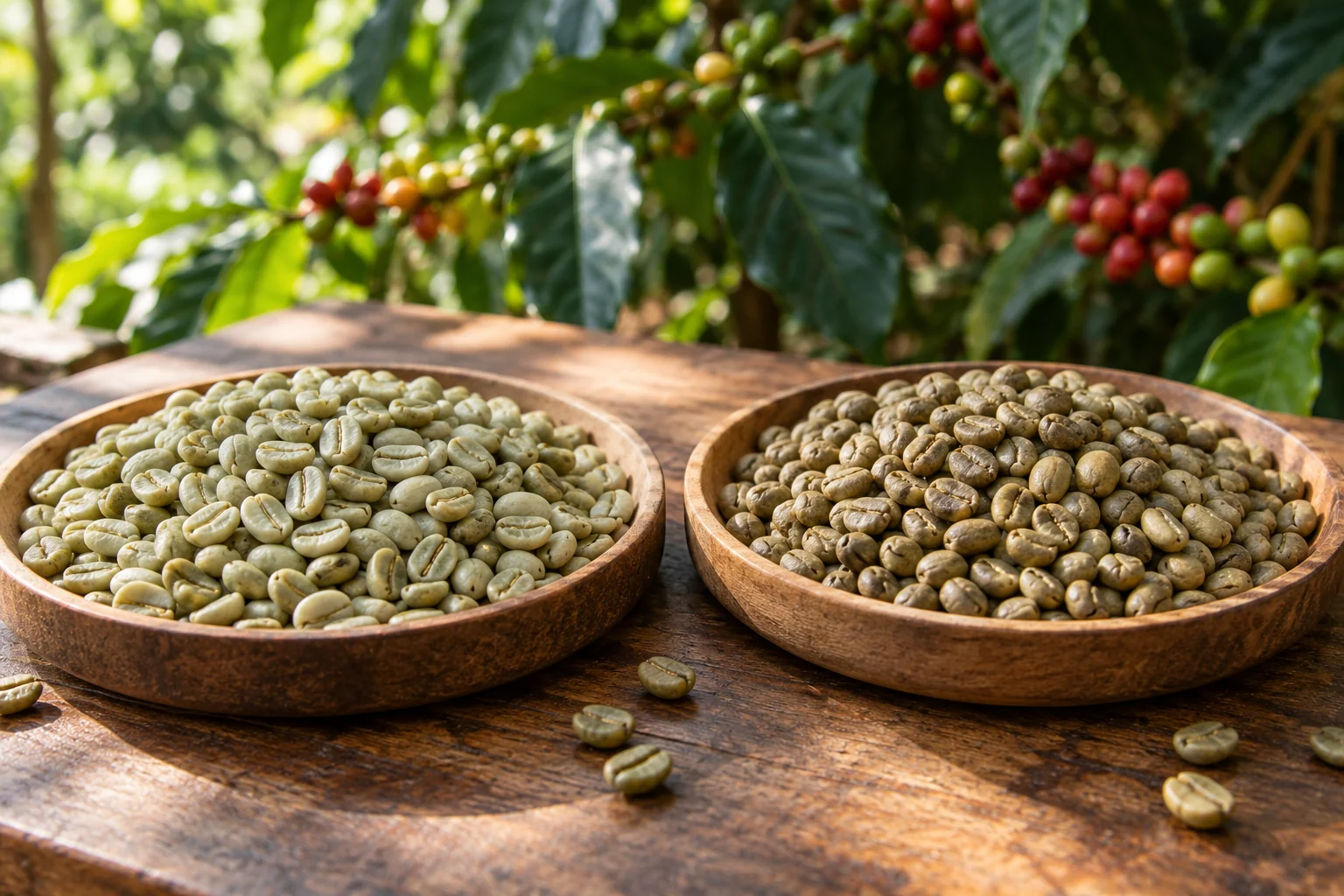
  • washed vs. natural process
  • Arabica vs. a Robusta-containing coffee
  • two origins roasted similarly
  • the same coffee brewed at two grind settings

Keep the brewing conditions as similar as possible so the comparison has meaning.

For roast differences, see Understanding Coffee Roasting Levels.

For species context, see Arabica vs. Robusta Coffee.

A simple home tasting setup

You do not need formal cupping equipment.

Use:

  • two or three coffees
  • identical or similar cups
  • a scale if available
  • the same water
  • the same brewing method
  • a spoon
  • paper or phone notes

Brew each coffee using the same ratio and comparable grind for the method.

Label the cups with letters if you want to reduce expectations from brand names or packaging.

Then taste back and forth rather than finishing one cup before starting the next.

Should you slurp coffee?

Professional cuppers slurp coffee from a spoon because the technique spreads liquid across the palate and helps volatilize aromas.

You can try it at home, but it is not required.

A normal sip can still teach you plenty.

If you do slurp, keep it controlled and avoid sharing tasting spoons unless they are properly rinsed/sanitized.

What is coffee cupping?

Cupping is a standardized way of preparing and evaluating coffee so samples can be compared under consistent conditions.

In a traditional cupping setup, ground coffee is placed directly in cups, hot water is added, a crust forms, tasters break the crust, remove floating grounds, and evaluate the coffee as it cools.

Professional cupping protocols are designed for repeatability and industry communication.

Home tasting does not need to imitate every professional step.

If your goal is simply to understand what you like, controlling a few variables and comparing cups side by side is enough.

Use the Coffee Taster's Flavor Wheel as a prompt, not a test

The Specialty Coffee Association Coffee Taster’s Flavor Wheel was updated in collaboration with World Coffee Research and is built on the WCR Sensory Lexicon.

The lexicon identifies 110 flavor, aroma, and texture attributes and provides reference standards for sensory work.

For a beginner, the wheel is most useful when you move from broad to specific.

Example:

  1. You notice “fruity.”
  2. Is it more berry-like, citrus-like, dried fruit, or something else?
  3. Does “berry” remind you more of strawberry, blackberry, or another familiar reference?

Stop when your confidence stops.

“Fruity” is more useful than inventing “blackcurrant” because you think the bag says it should be there.

Do not read the tasting notes first

Packaging can prime your expectations.

If the bag says “blueberry, jasmine, milk chocolate,” you are more likely to search for those exact references.
Try this experiment:

  1. Taste and write three observations before reading the label.
  2. Read the roaster’s notes.
  3. Taste again.
  4. Notice whether the label changed what you perceived.

Neither result is wrong. The exercise shows how expectation influences attention.

How roast changes what you taste

Roasting transforms coffee chemistry and aroma.

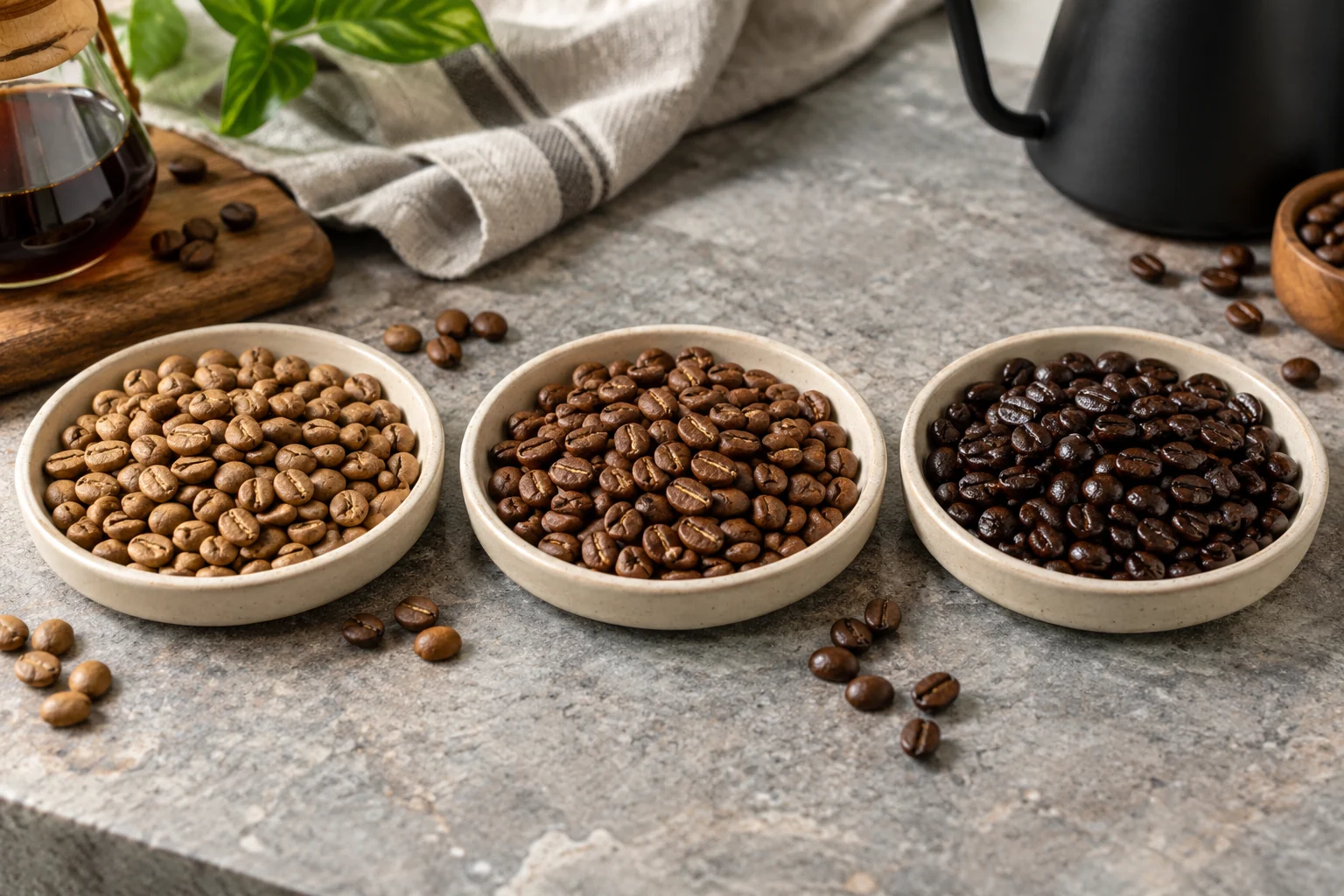
Lighter roasts often preserve more of the origin/process character, while darker roasting can increase roasted, smoky, bitter, caramelized, or cocoa-like impressions.

That does not mean light roast is objectively “more flavorful” or dark roast is “burnt.”

They emphasize different sensory directions.

Use our roast-level guide as a framework, then taste examples rather than memorizing stereotypes.

How grind and extraction change flavor

If the same coffee suddenly tastes sour, bitter, hollow, or drying, the bean may not be the only explanation.

Grind changes extraction.

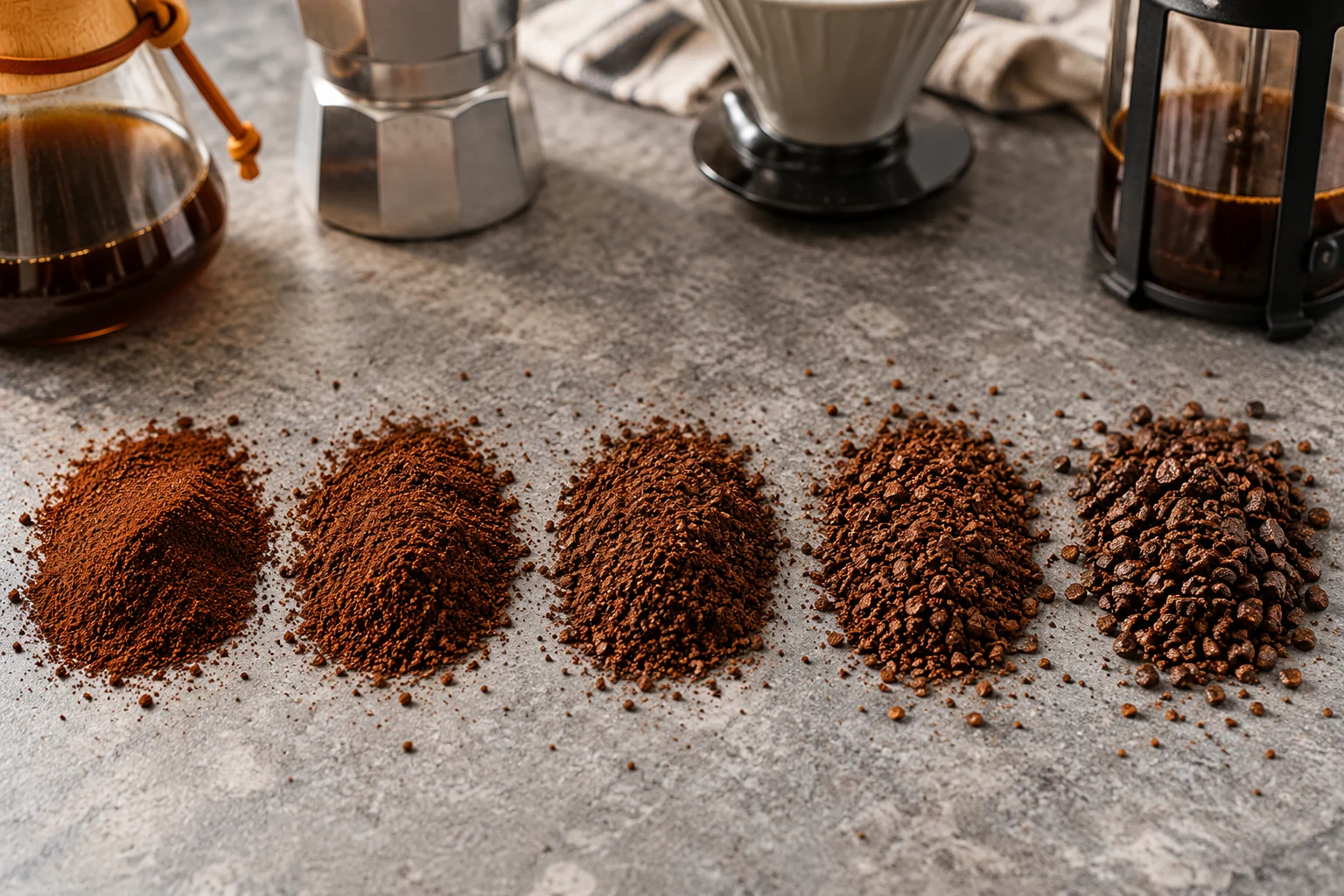
A finer grind usually increases accessible surface area and can also alter flow behavior, especially in espresso. Too fine can create excessive resistance or extract harshly in some methods. Too coarse can produce a thin or underdeveloped cup.

See Find the Right Grind Size for the technical side.

For tasting practice, brewing one coffee at two nearby grind settings is an excellent exercise because you can experience the difference directly.

Acidity vs. sourness

These words overlap, but they are useful to separate in practice.

Pleasant acidity can feel bright, juicy, crisp, or lively and is supported by sweetness and aroma.

Unpleasant sourness often feels sharp, hollow, or unfinished.

Under-extraction can create sourness, but not every acidic coffee is under-extracted.

A high-grown light roast may naturally express bright fruit acidity even when brewed well.

Do not “fix” every bright coffee until it tastes dark and flat.

Bitterness vs. roast character

Bitterness is a basic taste. Roast character is a broader set of aromas and flavors created during roasting.

Dark-roasted coffee can have smoke, char, cocoa, caramelized sugar, spice, or roasted nut qualities in addition to bitterness.

If bitterness dominates everything, shorten extraction, adjust grind, lower brew temperature if appropriate, or try a different roast.

If you enjoy it, there is nothing inherently wrong with a bitter component.

Learn a small vocabulary you actually use

A practical beginner vocabulary might be:

Aroma

  • floral
  • fruity
  • nutty
  • chocolate
  • caramel
  • spice
  • roast/smoke

Acidity

  • low
  • soft
  • crisp
  • juicy
  • sharp

Sweetness

  • low
  • moderate
  • high
  • caramel-like
  • honey-like
  • fruit-like

Body

  • light
  • medium
  • full
  • silky
  • creamy
  • syrupy

Finish

  • clean
  • short
  • lingering
  • sweet
  • dry
  • bitter

This gives you enough language to compare cups without turning tasting into creative writing.

Keep notes simple

Use one line per coffee:

Coffee A: bright, floral aroma; medium sweetness; light body; citrus-like acidity; clean finish.

Coffee B: cocoa aroma; low acidity; fuller body; caramel-like sweetness; mild bitter finish.

After ten comparisons, patterns will appear.

You may realize that you prefer:

  • washed coffees
  • fruit-forward natural coffees
  • medium roast
  • low-acid full-bodied coffee
  • floral light roasts

Those preferences are more useful than a numerical score.

Taste coffee with food carefully

Food changes perception.

A sweet pastry can make coffee seem more bitter. Citrus can amplify or clash with acidity. Rich dairy can soften bitterness and change body.

If you are trying to learn the coffee itself, taste it plain first.

Then pairing becomes another experiment rather than a distraction.

Our separate coffee and food pairing guide builds on this sensory foundation.

Common beginner mistakes

Chasing the notes printed on the bag

Use them as clues after you form your own impression.

Drinking too hot

Let the coffee cool enough to reveal detail.

Changing brew variables between samples

If you are comparing coffees, keep the method as consistent as practical.

Assuming expensive means you should like it

Price and preference are not the same thing.

Treating “acidity” as a defect

Acidity can be desirable and balanced.

Treating dark roast as inferior

Preference matters. Judge whether the roast and brew produce a cup you enjoy.

Inventing specificity

“Fruit” is better than “blackberry jam with hibiscus” if fruit is all you confidently perceive.

A four-week sensory practice

Week 1: roast

Taste a lighter and darker roast side by side.

Week 2: origin

Taste two coffees roasted to a similar level but from different origins.

Week 3: extraction

Brew the same coffee at two grind settings.

Week 4: temperature

Taste the same cup hot, warm, and cool and note what changes.

This routine builds sensory memory without requiring professional calibration materials.

What professional sensory tools add

The World Coffee Research Sensory Lexicon was created to make coffee sensory description more measurable and repeatable. It includes 110 attributes with references for aroma, flavor, and texture.

The SCA Coffee Taster’s Flavor Wheel translates that work into a visual hierarchy that helps tasters move from broad categories toward more specific descriptors.

These tools are valuable because they create shared language.

They do not mean your personal enjoyment must match a professional score.

Bottom line

Coffee tasting gets easier when you compare cups, control brewing variables, taste as coffee cools, and describe only what you can actually perceive.

Start broad: aroma, sweetness, acidity, bitterness, body, finish, balance.

Use professional flavor tools for vocabulary, not as a test you can fail.

The goal is to learn which coffees and brewing choices you enjoy — and to be able to explain why.

Sources and further reading

Keep exploring

Related Brew Sip Repeat stories

← Back to the story library
↑