Coffee · Mar 23, 2025

Why the World’s Most Expensive Coffees Cost So Much

Learn why rare auction coffees can sell for extraordinary prices, from tiny lots and elite quality to Geisha genetics, producer reputation and competitive bidding.

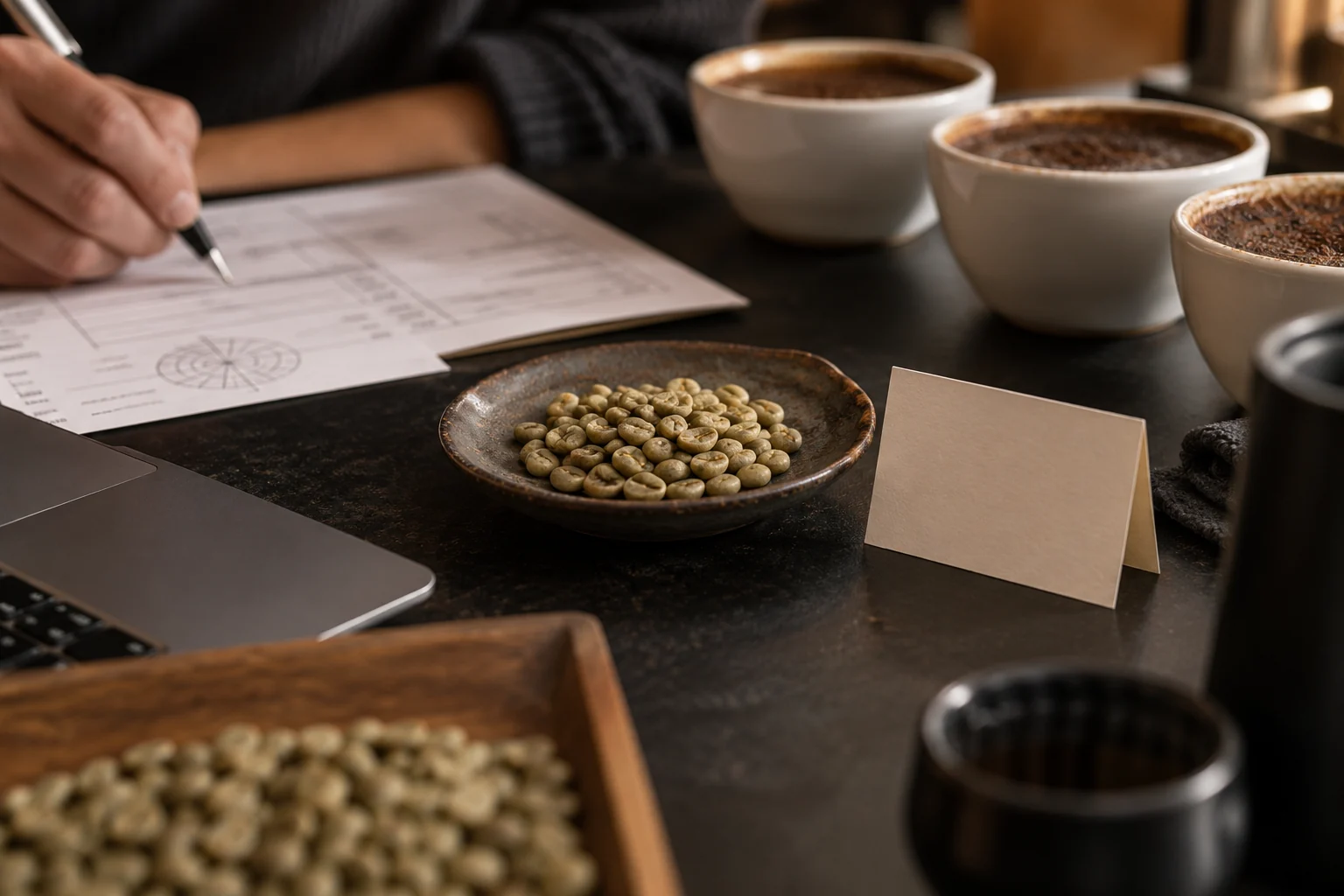
A small sample of green coffee beans sits beside a blank lot card, a faint cupping sheet and the edge of a laptop on a dark table.
AI-generated editorial illustration.

Some coffee prices sound almost impossible until you look at what is actually being sold. The headline-grabbing numbers usually do not describe a normal retail bag. They describe tiny lots of unroasted green coffee sold at specialty auctions, where rarity, competition quality, producer reputation and a handful of determined buyers can push prices far beyond everyday specialty coffee.

As of September 13, 2026, the most widely reported world auction benchmark remains the 2025 Best of Panama sale of a washed Geisha lot from Hacienda La Esmeralda. The 20-kilogram lot sold for US$30,204 per kilogram, or US$604,080 total. That was a green-coffee auction price, not the price of a normal café bag.

The number matters because it shows how far the rarest end of specialty coffee has separated from ordinary retail coffee. It should not be used to suggest that an expensive bag automatically tastes better or that most Geisha coffee sells anywhere near that level.

The first thing to understand: auction coffee is its own market

Specialty auctions bring together a limited set of competition-winning or producer-selected lots and buyers who may include roasters, importers, collectors and prestige-focused businesses.

The price is normally quoted per kilogram or pound of green coffee before roasting. A winning bid can reflect far more than farming cost alone:

  • extremely small lot size
  • competition score
  • unusual sensory character
  • variety or genetic identity
  • elevation and growing conditions
  • processing method
  • producer history
  • traceability
  • buyer demand
  • publicity value
  • bidding competition on that particular day

That is why a record auction price should not be treated like a stable market price.

The current benchmark: Panama Geisha at US$30,204 per kilogram

The 2025 Best of Panama auction produced the number that still dominates discussions of ultra-expensive coffee.

A washed Geisha lot from Hacienda La Esmeralda sold for US$30,204 per kilogram. Reports from the auction describe a 20-kilogram lot and a total winning bid of US$604,080.

The lot also carried an extraordinary competition score, which helped put it in a tiny category of coffee where quality recognition, scarcity and auction competition all reinforced one another.

This is the kind of price that should always be date-stamped. Coffee auctions continue every year, and a future lot can reset the record.

Auction records change quickly: prices and records in this article are date-stamped. Check the latest Best of Panama and major private-auction results for newer records.

Why Geisha keeps appearing in record-price headlines

Panama Geisha, also called Gesha in parts of the coffee industry, has become closely associated with elite specialty coffee.

World Coffee Research notes that the Panamanian Geisha lineage associated with accession T2722 can produce exceptionally high cup quality at high elevations. It is known for delicate floral and fruit aromatics when grown and managed well.

That does not mean every coffee labeled Geisha is genetically identical or equally good. World Coffee Research specifically warns that the name is sometimes applied to coffees that do not share the same genetics as Panamanian Geisha.

For buyers at the top end of the market, authenticated variety, farm identity and lot traceability therefore matter.

For more basic species context, see Arabica vs. Robusta Coffee: What’s the Difference?. Variety prestige is only one part of the price story.

Tiny lots create real scarcity

A 20-kilogram auction lot is small.

Once a rare lot is divided across roasting tests, quality-control samples, service losses and actual customer portions, there is not much coffee available. If multiple buyers want the same lot, the limited supply can magnify competition dramatically.

That is different from a high-quality coffee that a roaster can buy in dozens of bags across a full harvest.

The smaller and more singular the lot, the easier it is for price to become detached from normal commodity or even normal specialty-coffee pricing.

Competition scores help establish credibility

High-end coffee auctions generally do not ask buyers to bid on a mystery product with no quality context.

Lots are cupped, scored and ranked. A standout competition score gives buyers evidence that experienced judges found something unusual in the cup.

But scores are not magic. They are one input in the auction.

Two coffees with similar scores can sell for very different prices because one has a stronger producer reputation, a rarer variety, a smaller lot, a more compelling sensory profile or simply more aggressive bidders.

If you want to understand sensory language rather than auction economics, use Coffee Tasting for Beginners: Aroma, Acidity, Body & Flavor.

Producer reputation can become part of the value

Hacienda La Esmeralda is not just another anonymous farm in this market.

The estate is closely tied to the modern rise of Panama Geisha. Its name gives buyers provenance they can communicate to customers, and its history in elite auctions creates confidence that future lots will attract attention.
Reputation does not replace cup quality, but it can amplify the value of a coffee that already has exceptional results.

The same dynamic appears in wine, art and other markets where provenance matters: buyers are not paying only for the physical object. They are also paying for a documented origin and a story that can be verified.

That is why Single-Origin Coffee: What It Means and How to Read the Bag is useful context. Traceability matters at ordinary specialty-coffee prices too, even when the numbers are nowhere near auction records.

Processing can help a lot stand apart

Washed, natural, honey and controlled-fermentation approaches can produce different sensory results.

At elite competitions, producers may isolate tiny sections of a farm, pick only at specific ripeness levels, separate lots carefully and use tightly controlled processing and drying protocols.

Those choices require labor, experimentation, infrastructure and the willingness to keep a tiny lot separate instead of blending it into a larger commercial batch.

Processing should not be treated as a guaranteed shortcut to high price. The point is that exceptional auction lots usually involve unusually tight selection and handling.

Buyers are bidding against each other, not against a fixed price list

This may be the most important part of the record-price story.

An auction price is created by competition.

If two well-funded buyers both decide that the same coffee has marketing, prestige or customer value far beyond its starting price, the final number can rise rapidly.

The winning bid therefore tells you what the final buyer was willing to pay in that auction. It does not prove that every kilogram of comparable coffee is worth the same amount.

That distinction helps explain why country-specific records can be much lower than the global headline. In 2026, for example, a coffee from the Democratic Republic of Congo set a reported national record at US$55.50 per kilogram. Costa Rica’s 2026 Cup of Excellence auction saw a top lot sell for US$200.10 per pound. Those are extraordinary results in their own markets, but they are not directly comparable to the tiny Panama lots that dominate world-record headlines.

Is expensive coffee actually better?

Sometimes it may be exceptional. But price and sensory quality are not the same measurement.

Price can include:

  • quality
  • rarity
  • auction demand
  • brand prestige
  • limited supply
  • marketing value
  • collector behavior

A US$30,000-per-kilogram auction lot is not 300 times more delicious than a US$100-per-kilogram coffee in any measurable universal sense.

For most drinkers, the more useful question is whether a coffee delivers a flavor experience they enjoy at a price they consider worthwhile.

You do not need record-breaking coffee to taste exceptional coffee

The fun part of specialty coffee is that many of the same ideas behind famous auction lots are available at far more accessible prices:

  • clear farm or cooperative information
  • traceable origin
  • carefully selected varieties
  • thoughtful processing
  • transparent roast information
  • useful tasting notes
  • fresh roasting

A well-roasted, traceable coffee can teach you far more about origin and processing than an expensive coffee bought only because the price sounds impressive.

Use Coffee Roast Levels Explained: Light vs. Medium vs. Dark and Coffee Grind Size Guide: Match the Grind to Your Brew Method to get more from the coffee you already have before chasing prestige lots.

A note on Kopi Luwak, Black Ivory and “luxury coffee” lists

Articles about the world’s most expensive coffee often mix several very different categories together: public auction records, animal-processed coffees, luxury retail products and café servings with extravagant presentation.

Those are not equivalent price comparisons.

This Brew Sip Repeat article uses verified green-coffee auction pricing as the cleanest benchmark because it provides a dated lot, quantity, buyer and bid price. We should not rank animal-processed coffees or luxury retail packages without current, verifiable pricing and sourcing evidence.

Bottom line

The most expensive coffees are expensive because several forces can stack on top of each other: exceptional quality, rare genetics, tiny lots, meticulous processing, famous producers and competitive buyers.

The headline record is fascinating, but it represents the extreme edge of the coffee market. It should not become a shortcut for judging everyday coffee.

If you are curious about high-end coffee, start with traceability and taste. Learn where the coffee came from, how it was processed, how it was roasted, and what you actually notice in the cup.

That will teach you more than the price tag alone.

Sources and further reading

Keep exploring

Related Brew Sip Repeat stories

← Back to the story library
↑