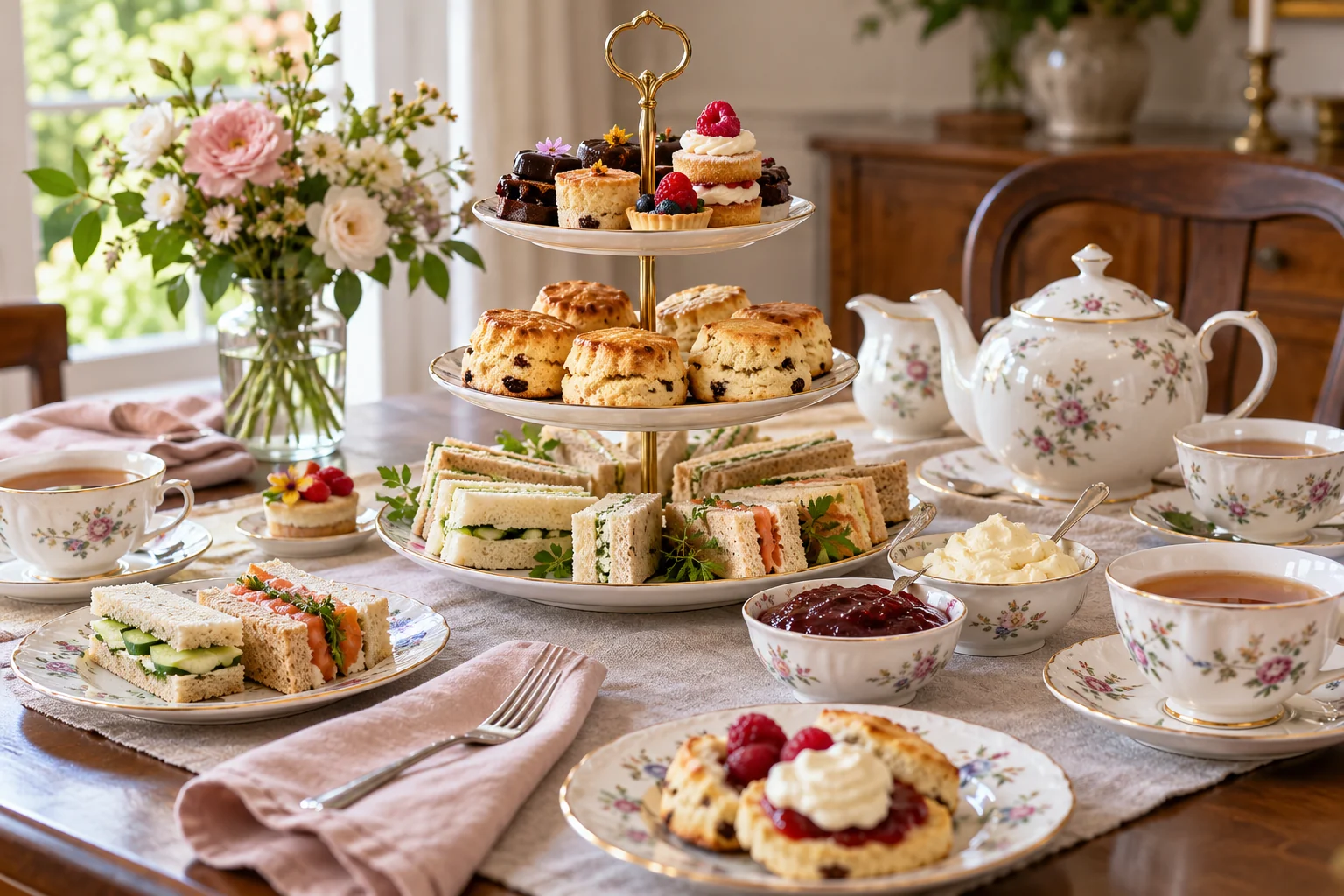
A good afternoon tea does not need a hotel dining room, a silver service set or a list of intimidating etiquette rules. At home, the essentials are simple: well-brewed tea, a few small savory bites, scones, something sweet and enough time to sit down together.
The goal is not to reenact Victorian Britain perfectly. It is to borrow the structure of a British social tradition and make it practical for the people you are actually hosting.
What afternoon tea is — and what it is not
The UK Tea & Infusions Association describes afternoon tea as a social custom that became associated with a light mid-afternoon meal between lunch and dinner. Tradition credits Anna, 7th Duchess of Bedford, with helping popularize the practice in the early nineteenth century, though tea gatherings had deeper roots before that.
Afternoon tea is also not the same thing as high tea.
Historically, high tea developed more as a substantial end-of-workday meal, often with heartier hot food. Afternoon tea was lighter and more social, built around tea plus smaller savory and sweet foods.
Modern hotels may use the labels creatively, so do not assume every commercial “high tea” follows the historic distinction exactly.
The easiest home formula
For a small gathering, build the menu in four parts:
- Tea
- Small savory items, usually sandwiches or similar bites
- Scones with preserves and cream or another chosen accompaniment
- Small sweets such as cakes, tartlets, shortbread or pastries
That basic progression resembles the structure still used by major London afternoon-tea services. Fortnum & Mason, for example, currently describes its classic offering around tea, sandwiches, scones and pastries/cakes.
You do not need dozens of items. Variety matters less than making a manageable number of things well.
How much food should you make?
Afternoon tea should feel abundant enough to linger over without becoming a full buffet.
A practical starting point per guest is:
- 3–4 small sandwich fingers or savory bites
- 1–2 small scones
- 2–3 small sweets
- enough brewed tea for at least two cups, with more hot water or a second pot available
Adjust for the time of day, guest appetite and whether the event replaces another meal.
For larger groups, offer fewer different items rather than making six versions of everything.
Choose tea that works with the menu
You do not need a huge tea list.
A balanced home selection might include:
- a brisk black tea such as Assam or a breakfast blend
- a fragrant black tea such as Earl Grey
- a lighter option such as Darjeeling, green tea or oolong
- one caffeine-free herbal infusion for guests who want it
If you serve only one tea, choose something broadly food-friendly rather than an extremely delicate or heavily flavored specialty tea.
For brewing technique, use How to Brew Tea Better: Temperature, Time, Ratio & Water instead of relying on one temperature and steep time for every tea type.
Sandwiches: keep them small and fresh
Classic afternoon-tea sandwiches are usually neat, easy to pick up and lightly filled.
Common ideas include:
- cucumber with a light spread or herbed cream cheese
- egg salad / egg mayonnaise
- smoked salmon with cream cheese or soft cheese
- ham with mustard
- chicken with a mild savory dressing
These are examples, not mandatory rules.
The most important practical point is freshness. Assemble sandwiches close enough to serving that the bread stays soft without becoming soggy. If you prepare them slightly ahead, cover them well and refrigerate fillings that require cold holding.
Do not leave perishable fillings sitting at room temperature for an extended event.
Scones: the center of the middle course
Scones are one of the foods most strongly associated with modern afternoon tea.
Plain and fruit scones are both common. Serve them fresh enough to retain a tender texture, ideally warm or at room temperature rather than stale or refrigerator-cold.
Traditional accompaniments often include:
- clotted cream
- strawberry or other fruit preserves
- lemon curd
Whether cream or jam goes on first is a famous regional debate, not a test guests need to pass.
Set both on the table and let people eat the way they prefer.
Sweets: small portions work better
The sweet course is more enjoyable when guests can try a few small items instead of facing one enormous dessert.
Good home options include:
- mini fruit tarts
- small slices of loaf cake
- shortbread
- macarons
- madeleines
- bite-size chocolate cake
- mini lemon cakes
- small seasonal pastries
Choose two or three styles that contrast in texture or flavor.
If the savory course is rich, a fruit-forward or citrus dessert can keep the menu from feeling too heavy.
Do you need a three-tier stand?
No.
A tiered stand creates the familiar visual language of hotel afternoon tea, but it is not required for the meal to work.
Use what you already have:
- platters
- cake stands
- small plates
- serving boards
- two separate courses brought out one at a time