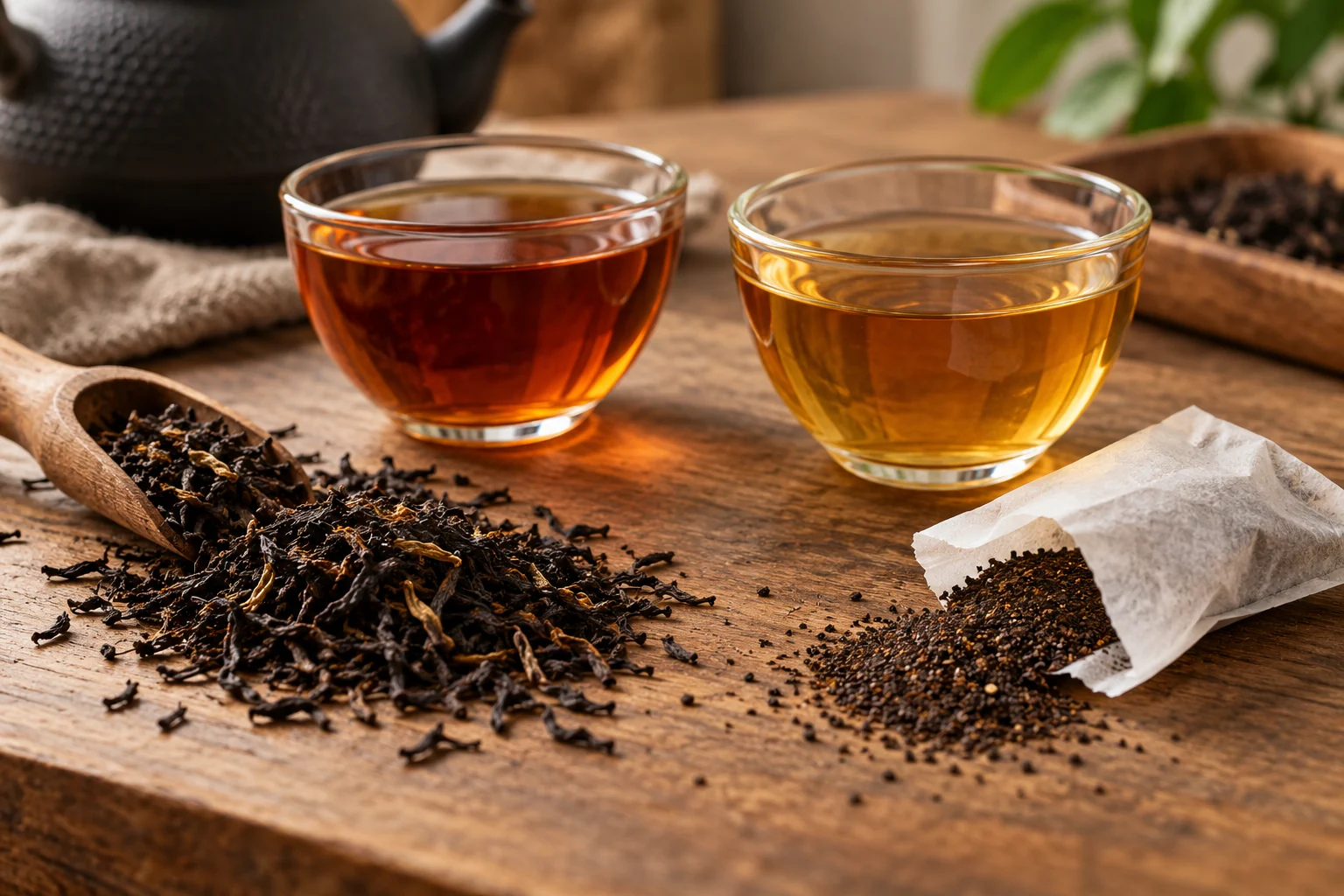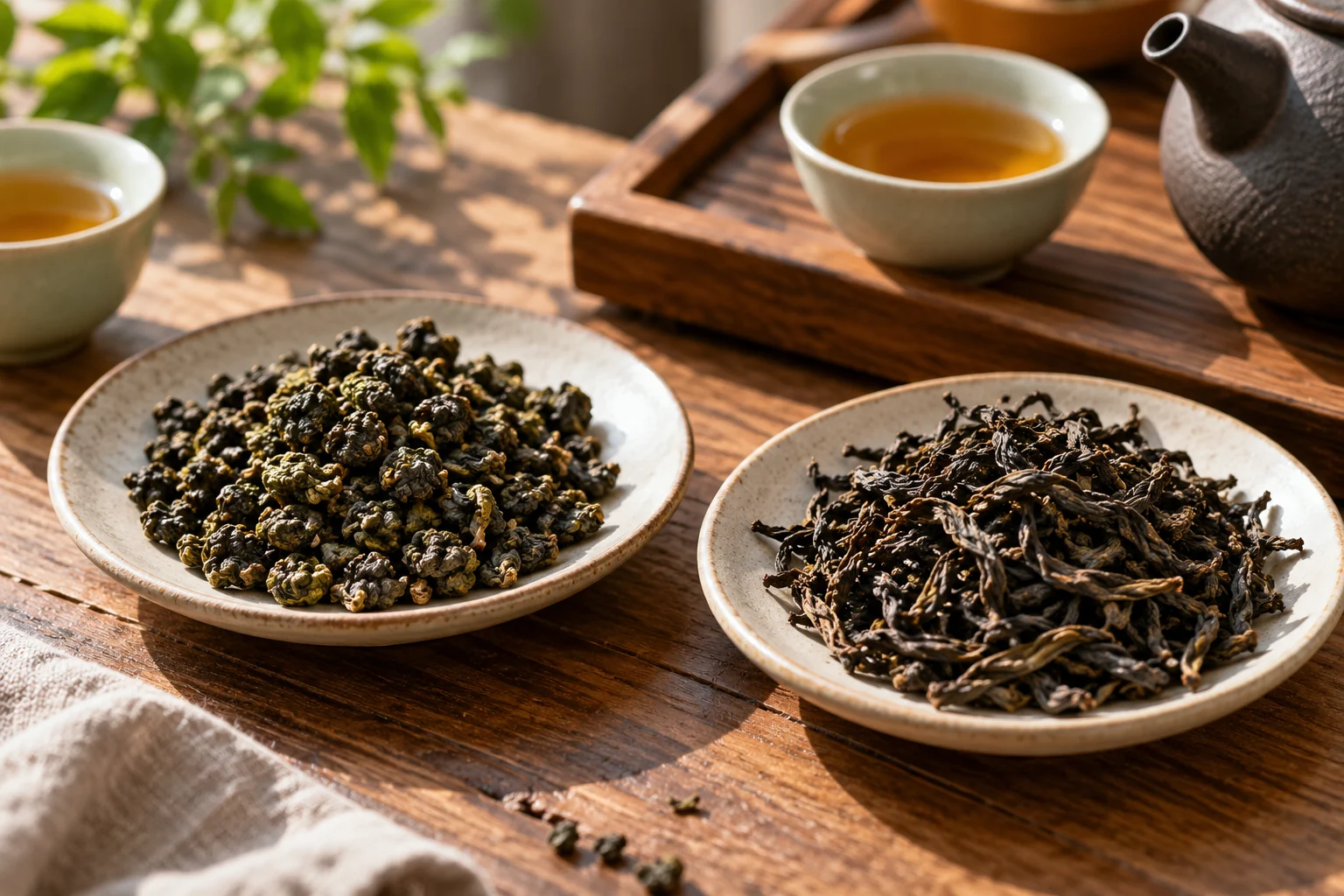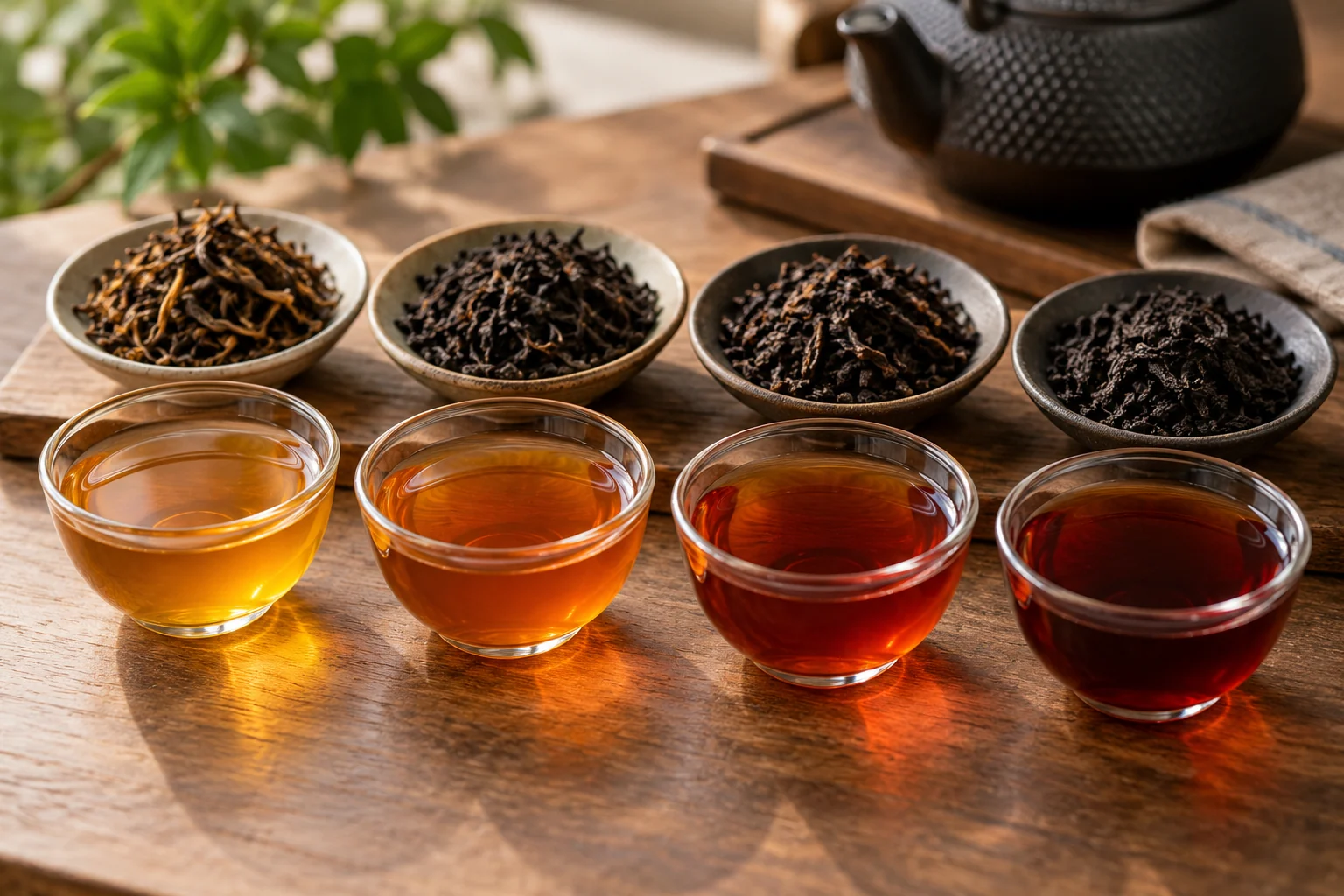
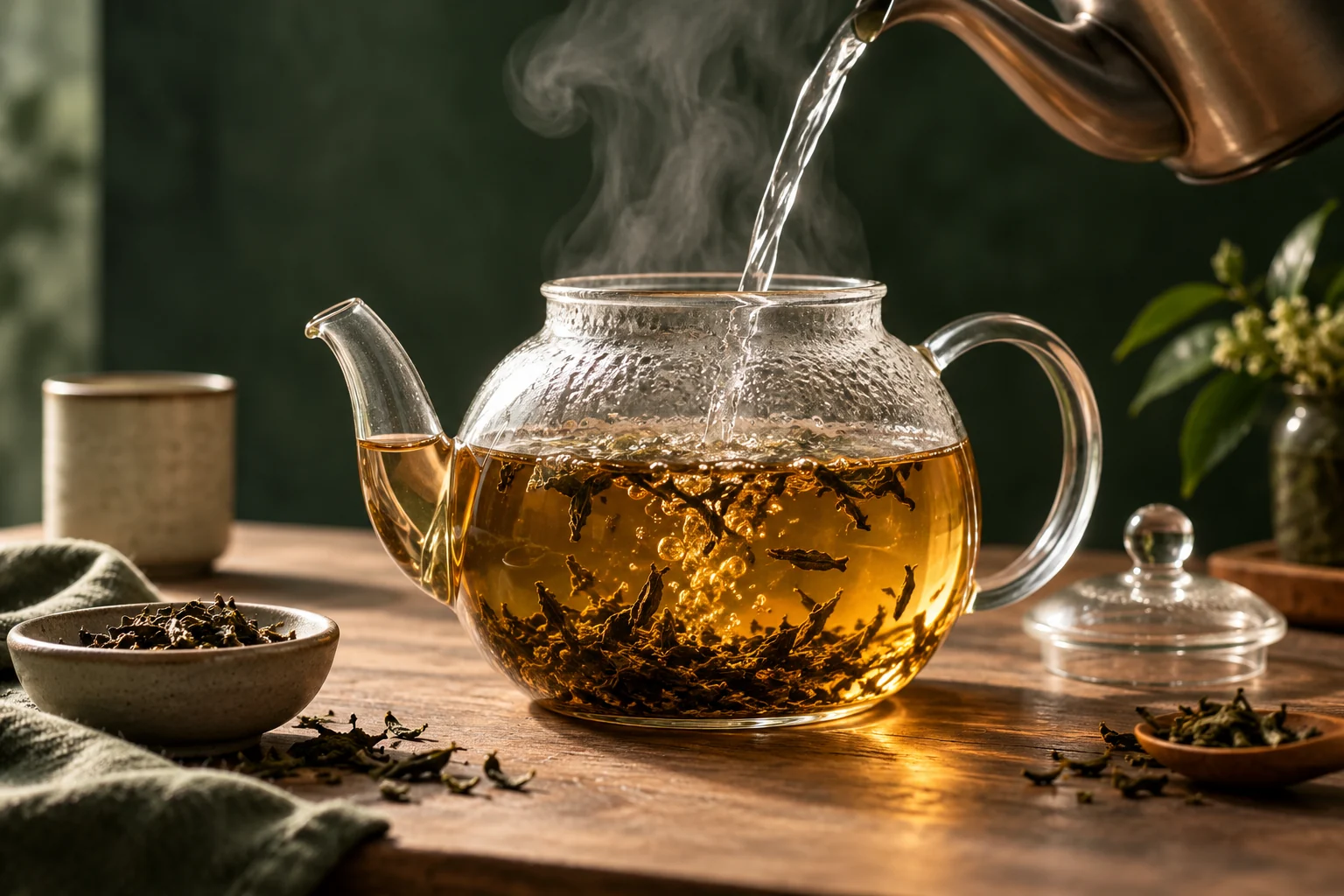
There is no single “perfect” cup of tea because green tea, black tea, oolong, white tea, matcha, and herbal infusions do not all behave the same way. The most reliable method is to control five variables: water, leaf amount, temperature, steep time, and when you separate the liquid from the leaves.
Start with the producer’s instructions, then adjust one variable at a time to fit your taste.
That approach works better than memorizing one rigid temperature chart and assuming it applies to every tea.
The five variables that matter most
1. Water
Tea is mostly water, so bad-tasting water can flatten an otherwise good leaf.
Use fresh potable water that tastes clean on its own.
Extremely hard water can mute aroma or create a dull surface film. Very soft or heavily purified water can sometimes make tea taste thin. You do not need laboratory water; you need water that is pleasant to drink and reasonably consistent.
If your tea suddenly tastes different even though you changed nothing else, water is worth checking.
2. Tea-to-water ratio
Too little tea can produce a thin cup no matter how long you steep it.
Too much tea can become intense quickly.
For Western-style brewing, many tea specialists use a few grams of leaf per standard mug or teapot as a starting point, but exact ratios vary by leaf size and tea style.
Path of Cha’s Western-style guide suggests roughly 1 gram of loose leaf per 70–100 ml of water as a general framework, then adjusting to taste.
The important part is consistency. Weighing the tea occasionally teaches you far more than an undefined “teaspoon,” especially when one tea is dense and rolled while another is long and fluffy.
3. Water temperature
Hotter water extracts flavor compounds faster.
That can be useful for robust teas, but it can also make a delicate tea turn bitter or astringent quickly.
As a broad starting point:
- delicate Japanese green teas may need quite cool water
- many green teas prefer water below boiling
- white teas vary widely by leaf maturity and style
- oolongs often use hotter water, especially roasted or darker styles
- black teas usually tolerate near-boiling water well
- pu-erh and many herbal infusions are commonly brewed with very hot or boiling water
These are starting tendencies, not laws.
A gyokuro and a pan-fired Chinese green tea are both “green tea,” yet they may want very different brewing conditions.
4. Steep time
Time controls how long water can extract from the leaf.
More time does not simply mean “more flavor.” It can also mean more bitterness, astringency, or heaviness.
Research on green tea has shown that sensory acceptance can peak at moderate steep times and decline when brewing is extended too long at high temperatures.
Black-tea research likewise shows that many soluble compounds extract substantially within the first few minutes.
Taste is the endpoint, not the timer.
5. Complete decanting
When the steep is finished, separate the tea from the leaves.
If the leaves remain sitting in a half-full teapot or infuser, extraction continues and the last cup may taste very different from the first.
Fully decanting gives you more repeatable results and makes multiple infusions easier to manage.
A practical temperature starting guide
Use this only as orientation. The producer’s instructions for the specific tea are usually more useful.
Green tea
A common range is roughly 160–185°F / 70–85°C.
Path of Cha gives about 175–185°F / 80–85°C for many green teas, while noting that gyokuro can use much cooler water.
If a green tea tastes harsh, bitter, or overly vegetal, lower temperature is one of the first adjustments to try.
White tea
Many white teas work around 175–195°F / 80–90°C, but mature-leaf white teas can tolerate hotter water than very delicate buds.
Do not assume white tea must always be brewed cooler than green tea.
Oolong
A common range is roughly 185–212°F / 85–100°C depending on oxidation, roast, cultivar, and brewing style.
Lighter greener oolongs often start toward the lower end, while roasted or darker styles may respond well to hotter water.
See What Is Oolong Tea? for why one oolong can brew very differently from another.
Black tea
Many black teas work well around 195–212°F / 90–100°C, but a delicate first-flush Darjeeling may taste better below a full boil while a robust CTC Assam can handle hotter water easily.
Our black tea varieties guide explains those style differences.
Pu-erh and dark tea
Boiling or near-boiling water is common, particularly for compressed and mature teas.
Herbal infusions
Herbal products are not all the same. Roots, bark, flowers, leaves, spices, and medicinal blends may require very different times.
Follow the manufacturer or a credible recipe for the specific botanical rather than treating all “herbal tea” as one category.
Why temperature charts sometimes disagree
You may see one tea guide recommend 175°F while another says 185°F for the same category.
That does not necessarily mean one is wrong.
Tea brewing has many interacting variables:
- cultivar
- leaf age
- leaf particle size
- processing
- roast
- storage
- ratio
- vessel size
- steep time
- personal taste
Scientific brewing studies also show that the conditions that maximize extraction of a specific chemical compound do not always match the conditions people find most pleasant to drink.
For example, hotter water can increase extraction, but prolonged high-temperature brewing can also increase bitterness and reduce sensory acceptance for some green teas.
The goal at home is not to maximize every extractable compound. It is to make a balanced cup you enjoy.
Western-style brewing
Western brewing uses a relatively large amount of water and a moderate leaf dose for a longer steep.
A simple method:
- Measure the tea.
- Heat water to a suitable starting temperature.
- Pour water over the leaf.
- Steep for the producer’s recommended time.
- Strain or remove the leaves completely.
- Taste before adding anything.
- Adjust one variable next time.
This is the easiest way to brew loose tea in a mug, basket infuser, or everyday teapot.
If you are deciding whether loose tea is worth the extra step, see Loose Leaf Tea vs Tea Bags.
Gongfu-style brewing
Gongfu brewing generally uses:
- more leaf
- a much smaller vessel
- shorter steeps
- many successive infusions
It is especially common with oolong, pu-erh, and some Chinese black and white teas.
The point is not merely to make tea “stronger.” Repeated short infusions let you observe how aroma, body, and flavor evolve as the leaves open.
Our Path of Cha gongfu brewing feature shows the technique in motion.
Should you preheat the teapot or cup?
Preheating helps reduce the temperature drop that occurs when hot water hits a cold vessel.
That can be useful for teas brewed hot in small teapots or gaiwans.