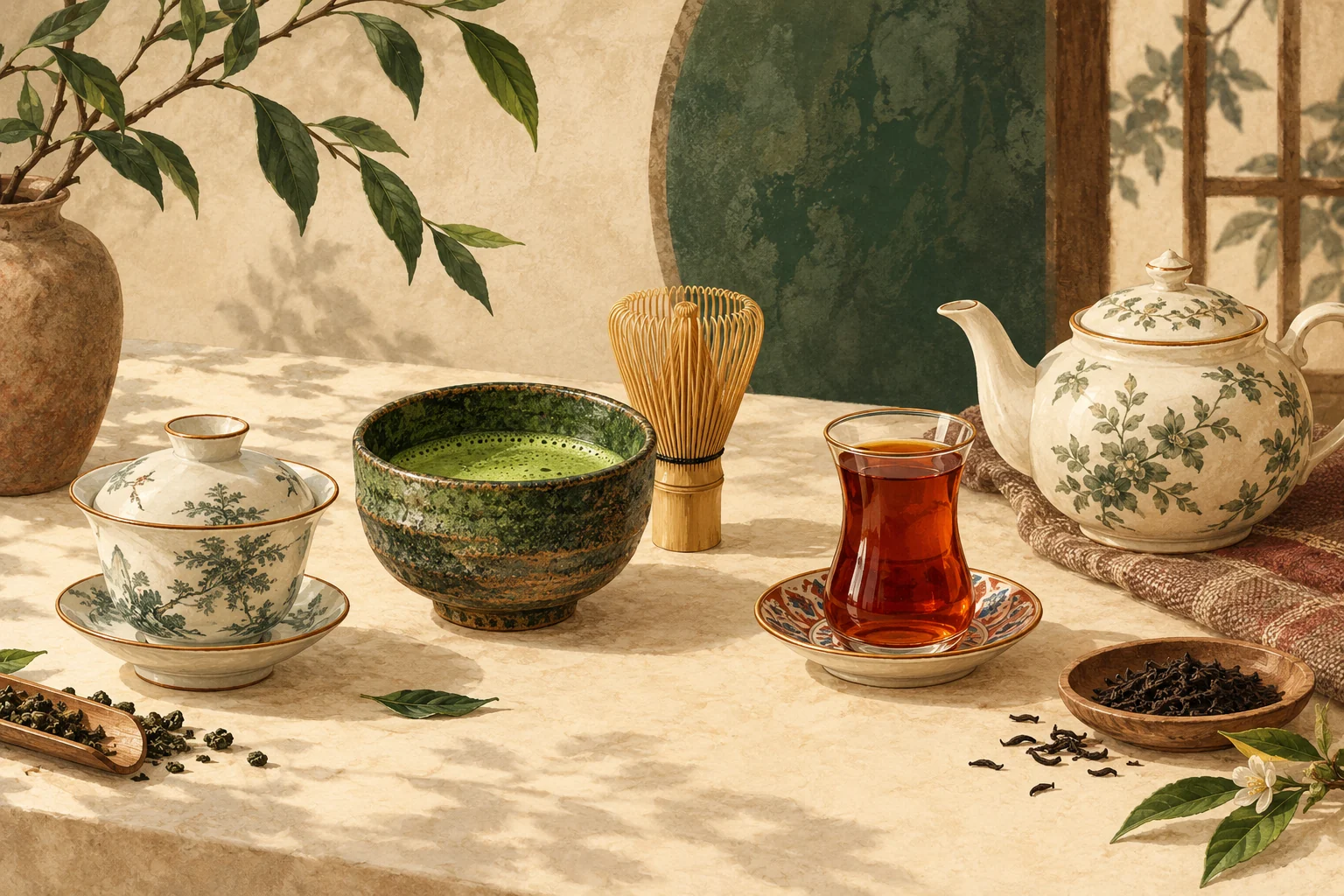
Tea is not one global ritual. The same plant can be part of everyday hospitality, formal ceremony, family life, craft traditions, religious practice, trade, agriculture and social identity depending on where and how it is used.
A respectful guide therefore should not say “this is how China drinks tea” or “this is the Japanese tea ceremony” as though millions of people follow one fixed script.
Instead, it is more useful to look at specific living traditions and what tea does within them.
This article focuses on a few well-documented examples — not an exhaustive map of world tea culture.
Tea culture is bigger than brewing instructions
A tea recipe tells you how much leaf and water to use. Tea culture can include much more:
- who prepares the tea
- who is served first
- what vessels are used
- whether the tea is everyday or ceremonial
- which foods accompany it
- how guests are welcomed
- how knowledge is passed between generations
- how tea is grown and processed
- what the gathering communicates socially
That is why cultural context matters when Brew Sip Repeat discusses gongfu brewing, matcha, afternoon tea or tea tourism.
Technique without context can turn a living tradition into a prop.
China: tea as craft, hospitality and social practice
In 2022, UNESCO inscribed Traditional tea processing techniques and associated social practices in China on the Representative List of the Intangible Cultural Heritage of Humanity.
UNESCO’s description emphasizes both production and social use. It covers knowledge and skills related to plantation management, picking, manual processing, drinking and sharing.
The tradition is not one tea or one brewing method. UNESCO notes six broad categories produced through Chinese tea traditions:
- green
- yellow
- dark
- white
- oolong
- black tea
Tea appears in homes, workplaces, tea houses, restaurants and temples and is used in socialization and ceremonies.
That variety is important. A casual pot shared with family, a formal tea gathering and a producer evaluating a new batch are all part of tea culture, but they are not interchangeable activities.
Gongfu tea is one tradition, not “the Chinese way”
Western tea media often presents gongfu cha as if it represents all Chinese tea drinking.
It does not.
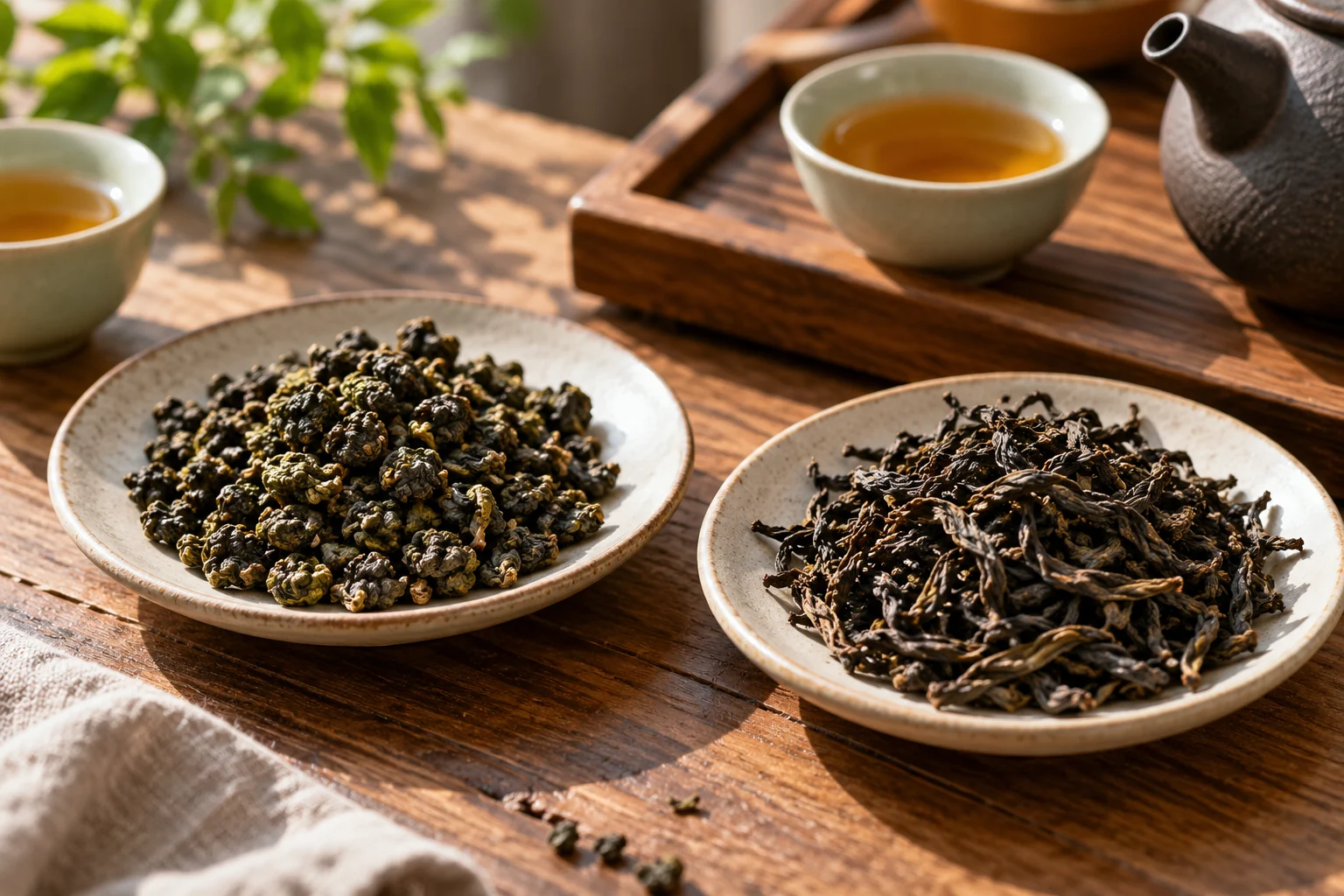
Gongfu-style brewing generally uses a relatively high leaf-to-water ratio, smaller vessels and repeated short infusions. It can be especially useful for teas such as oolong, puerh and other whole-leaf styles because the drinker can observe how the tea changes across infusions.
But tea is also brewed in larger pots, glasses and other everyday forms throughout China.
So Brew Sip Repeat should present gongfu as a specific practice and technique rather than using it as shorthand for an entire country.
For the brewing side, see What Is Oolong Tea? A Guide to Styles, Flavor, and Brewing and the planned Featured Videos source from Path of Cha.
Japan: chanoyu / chadō as a cultivated Way of Tea
Outside Japan, people often use the phrase “Japanese tea ceremony.” Practitioners may use terms such as chanoyu or chadō.
Organizations in the Urasenke and Omotesenke traditions describe chanoyu as a practice handed down through centuries of training, gathering and study.
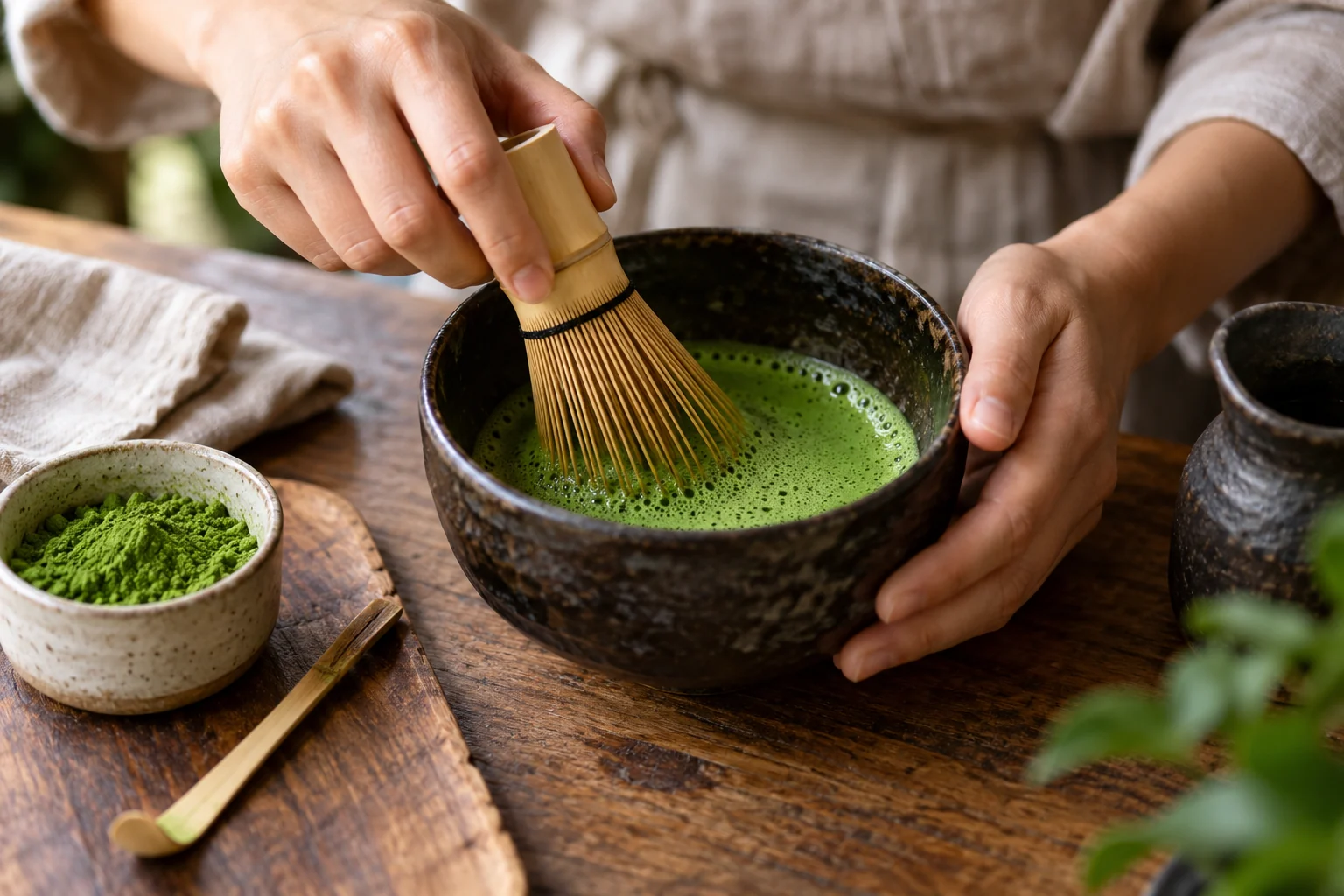
Matcha preparation is central, but the practice is not simply “whisk green tea in a bowl.” It can involve:
- utensils and their handling
- seasonal awareness
- architecture and the tea room
- flowers and calligraphy
- sweets
- guest/host relationships
- movement and etiquette
- attention to the moment
That is why a short matcha how-to should not pretend to reproduce a full tea gathering.
Our How to Make Matcha at Home: A Simple, Traditional-Inspired Method article is a home preparation guide, not a claim to teach chanoyu.
Türkiye and Azerbaijan: tea as hospitality and social connection
UNESCO also recognized the Culture of Çay (tea), a symbol of identity, hospitality and social interaction in Azerbaijan and Türkiye in 2022.
The UNESCO documentation emphasizes tea as a daily social practice that welcomes guests, maintains social ties and marks important moments.
Black tea is especially prominent, though practices vary by region and community.
Serving vessels, kettles, sweets and accompaniments are part of the experience. In Azerbaijan, tea is commonly associated with pear-shaped glasses; Turkish tea culture is also strongly associated with distinctive small glasses and two-part brewing traditions.
The important point is not the shape of the glass by itself. It is the social function of tea — creating time and space to receive people, talk and maintain relationships.
Hospitality is a recurring theme, but it is not identical everywhere
Many tea traditions connect tea with welcoming a guest, but similar words can hide different practices.
Hospitality may mean:
- repeated infusions around a shared tea table
- formal host-and-guest choreography
- strong black tea served during conversation
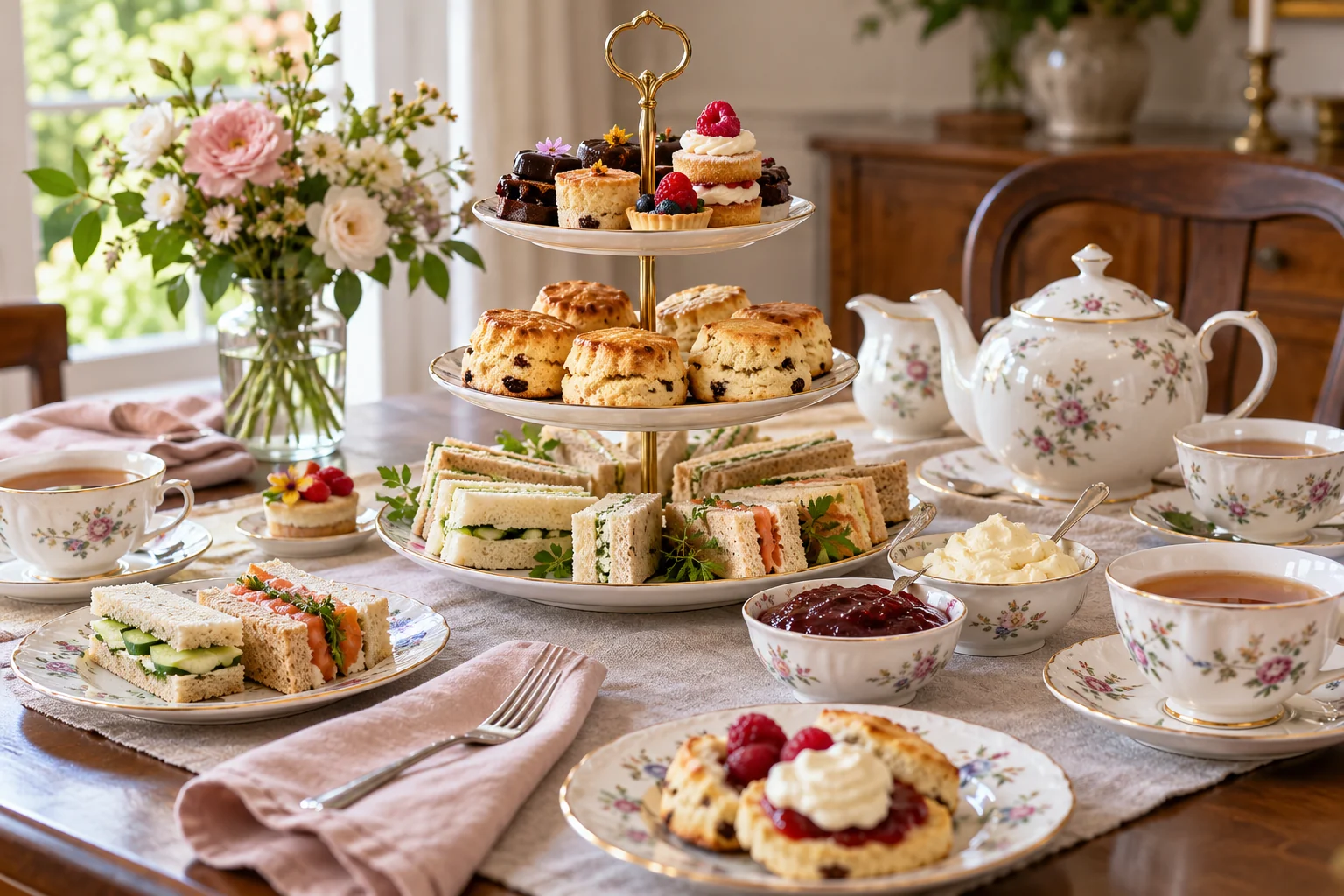
- an afternoon meal with tea, sandwiches and sweets
- tea prepared for family, coworkers or visitors throughout the day