Tea can help you feel more alert, but it is worth being precise about what that means.
A caffeinated drink can temporarily improve attention and reduce feelings of drowsiness. It does not create caloric energy, fix chronic fatigue, replace sleep, or treat an underlying medical problem.
That distinction matters because the original promise behind “energy tea” articles is usually too broad. The useful question is not “Which tea gives you the most energy?” It is which drink fits the level of caffeine, flavor, timing and ritual you actually want?
Here are five practical options, plus the tradeoffs that matter.
The short answer
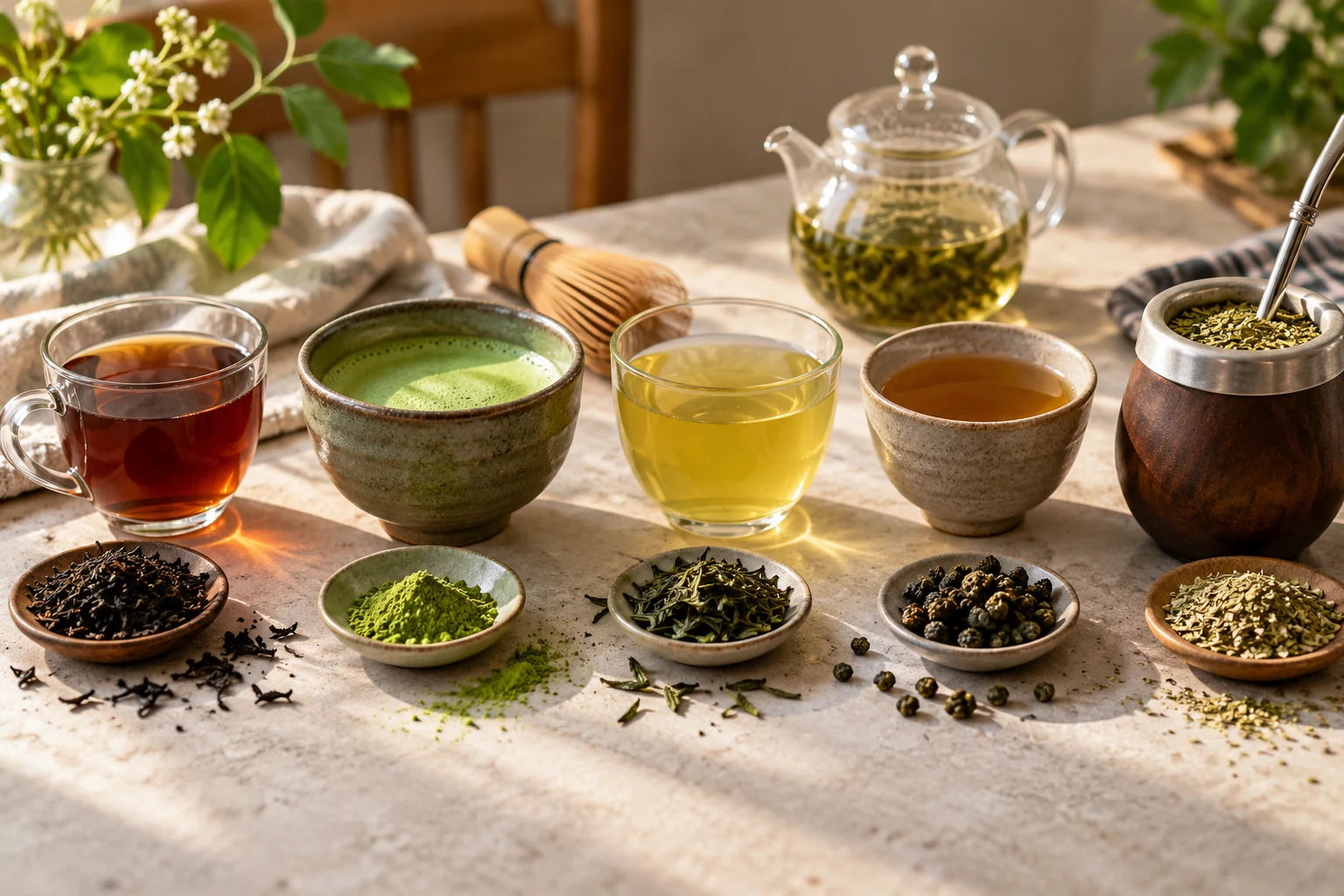
If your goal is short-term alertness:
- Black tea — usually the strongest familiar true-tea option in an ordinary mug.
- Matcha — can deliver a meaningful caffeine dose because you consume suspended powdered leaf rather than a strained infusion.
- Green tea — a moderate-caffeine option for people who want less stimulation than many coffees.
- Oolong tea — caffeine varies widely, but it can be a useful middle-ground style.
- Yerba mate — a caffeinated botanical infusion rather than true tea; useful if you enjoy its flavor, but it should still be treated as a caffeine source.
The FDA lists typical caffeine amounts of about 71 mg for 12 ounces of black tea and 37 mg for 12 ounces of green tea, but real products can vary substantially.
The right choice depends on dose and timing more than on marketing words such as “clean energy” or “natural boost.”
First, what does caffeine actually do?
Caffeine is a stimulant.
A 2025 systematic review and meta-analysis of randomized, double-blind, placebo-controlled trials found that caffeine acutely improved both attention accuracy and reaction time in healthy adults. The size of the effect was modest, and higher doses were not simply better for every outcome.
That is the evidence-based meaning of an “energy” benefit here: greater alertness and attention for a period of time.
It is not the same as providing calories, correcting anemia, treating thyroid disease, fixing sleep deprivation or resolving persistent fatigue.
If unusual tiredness is persistent, severe or unexplained, the answer is not to keep escalating caffeine.
1. Black tea: the straightforward alertness option
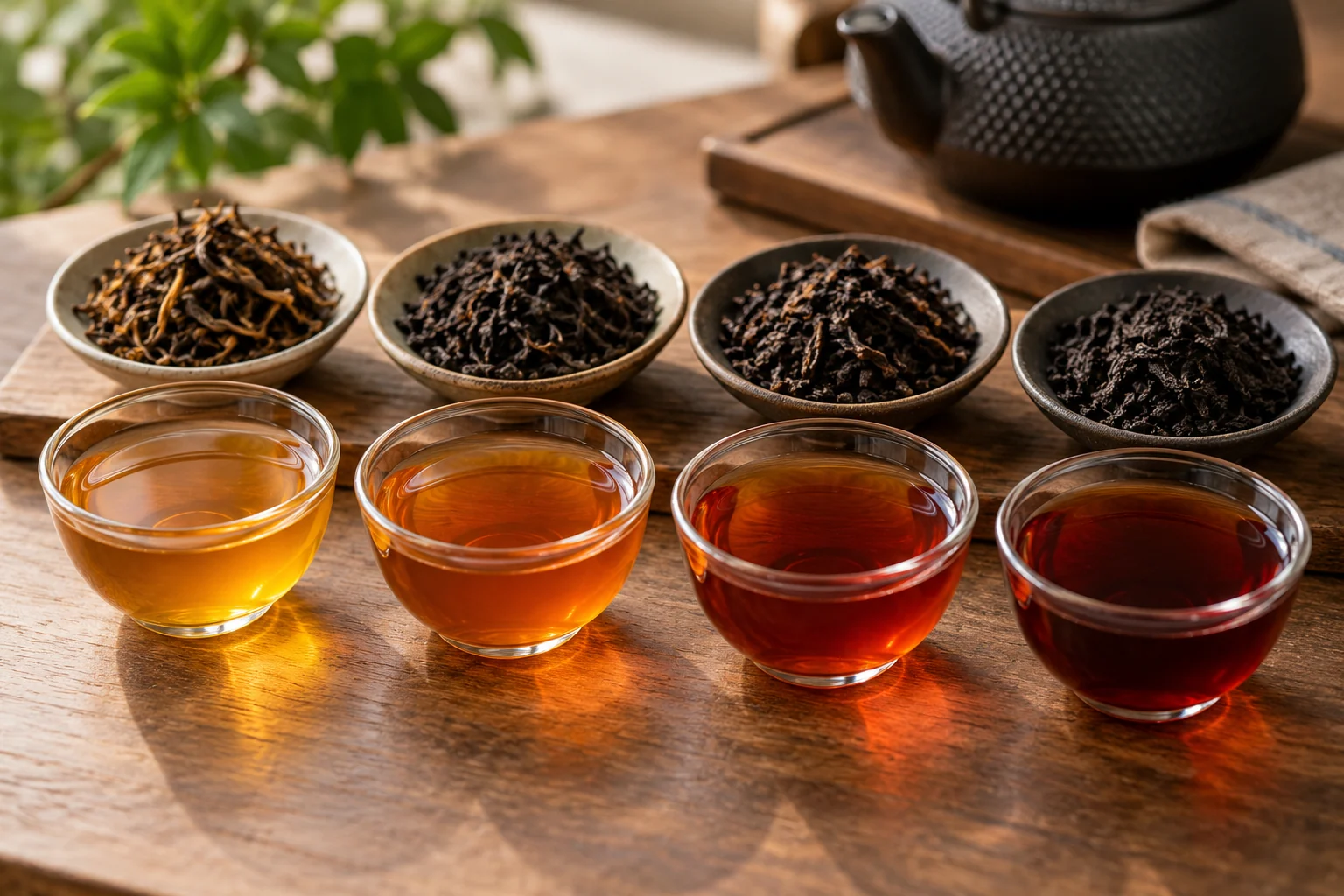
Black tea is fully oxidized Camellia sinensis and usually has a stronger flavor profile than green tea.
The FDA’s category estimate puts a typical 12-ounce black tea at around 71 mg of caffeine. That is less than many brewed coffees but still enough to matter, especially for people who are caffeine-sensitive.
Black tea works well when you want:
- a noticeable but not necessarily coffee-level stimulant effect
- a robust morning or early-afternoon drink
- a tea that handles milk well
- a simple brewed format rather than powdered leaf
Caffeine varies by brand, leaf quantity, particle size, water temperature and steep time. A strong mug is not guaranteed to match the category average.
For style and flavor context, see Black Tea Varieties Explained: Assam, Darjeeling, Ceylon & More.
2. Matcha: concentrated tea format, not magic fuel
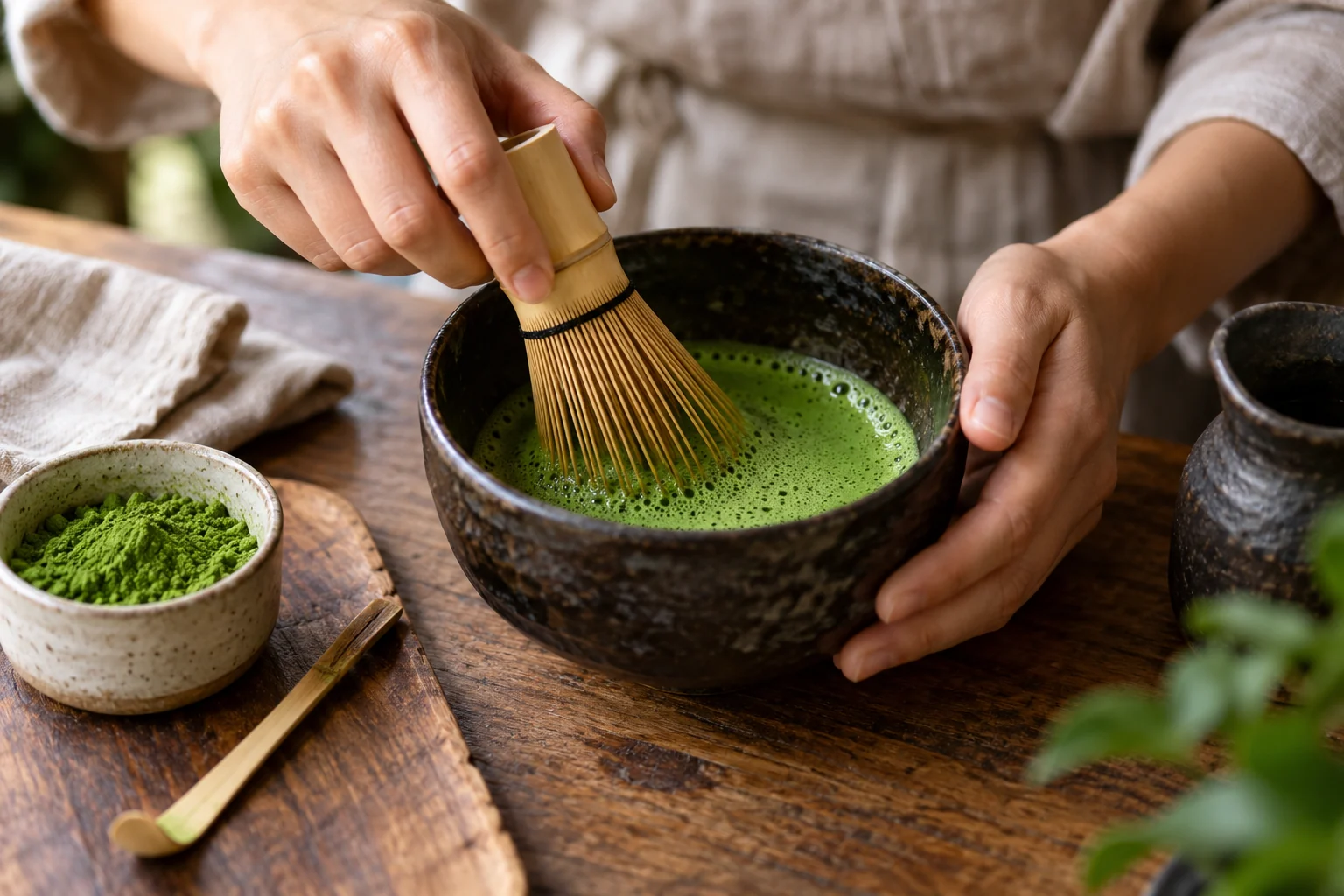
Matcha is powdered green tea whisked into water, so you consume the leaf material rather than straining it out.
That can make matcha a more concentrated tea experience than a typical steeped green tea, including a meaningful caffeine dose. Exact caffeine content varies by product and serving size, so a universal number would be misleading.
Matcha is often marketed with phrases such as “calm energy” because tea contains both caffeine and the amino acid L-theanine.
There is some research behind that idea, but it needs context.
A 2025 systematic review of randomized trials found small-to-moderate differences on some cognitive and mood outcomes after theanine plus caffeine, but confidence intervals often showed substantial uncertainty. The authors specifically called for more research using actual tea beverages and tea-equivalent doses.
So it is fair to say that caffeine and theanine are being studied together. It is not fair to promise a unique, jitter-free state for every matcha drinker.
For preparation, see How to Make Matcha at Home: A Simple, Traditional-Inspired Method.
3. Green tea: moderate caffeine with a lighter profile
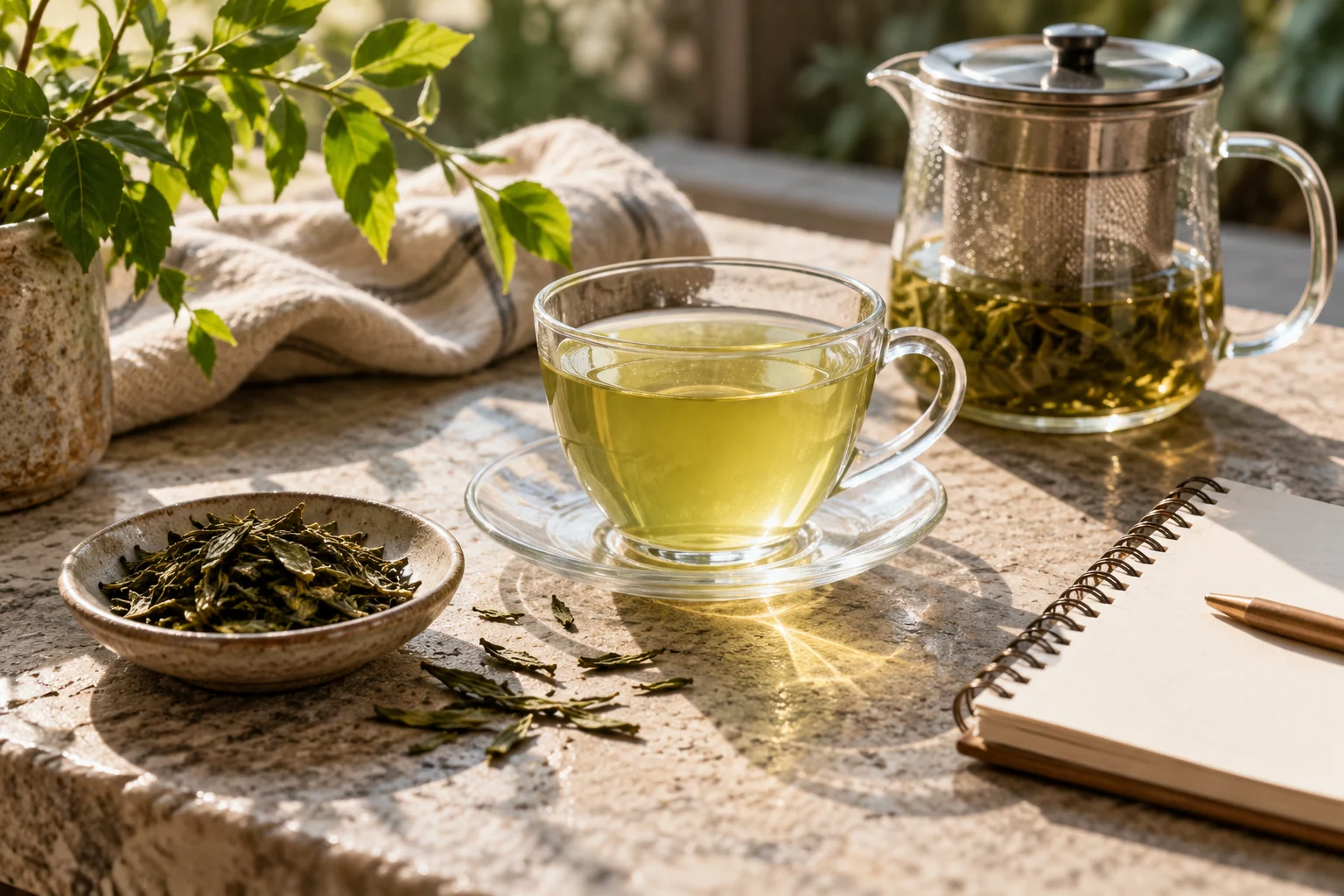
Green tea is often a practical choice for someone who wants caffeine but prefers less than a typical black tea or coffee.
The FDA lists about 37 mg of caffeine in a typical 12-ounce green tea, though brewing method and product make a difference.
Green tea can make sense when you want:
- a lighter morning or midday drink
- moderate caffeine rather than a large dose
- a broad range of grassy, vegetal, nutty, marine or sweet flavor profiles
- a drink that can transition easily into lower-caffeine afternoons
Do not confuse moderate caffeine with “no caffeine.” Green tea can still interfere with sleep if you are sensitive or drink enough of it late in the day.
For the health-evidence side without the miracle claims, see Green Tea Benefits: What Research Supports and What It Doesn’t.
4. Oolong: a flexible middle ground
Oolong covers a huge range of styles, from lightly oxidized floral teas to darker roasted teas.
Its caffeine content also varies widely. Leaf style, serving size, brewing temperature, infusion length and repeated steeps all affect the cup.
That means “oolong has X milligrams” is usually less useful than checking the specific product and paying attention to your own response.
Oolong is especially useful for people who care as much about a long, evolving tea session as they do about stimulation.
If that sounds more appealing than chasing a number, see What Is Oolong Tea? A Guide to Styles, Flavor, and Brewing.