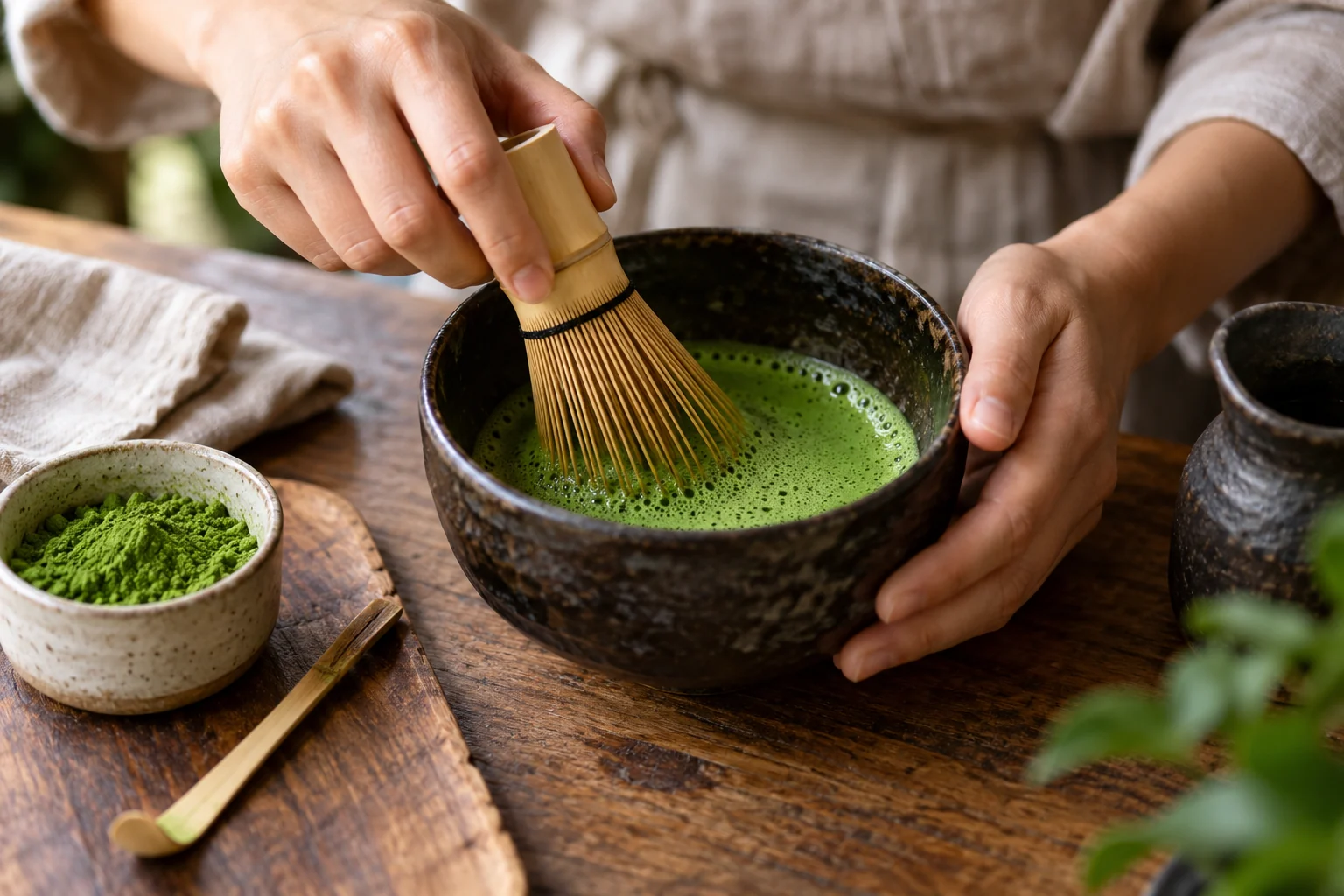

Green tea is often marketed as if one cup can improve nearly every part of the body. That is not what the evidence shows.
Green tea is a traditional beverage made from Camellia sinensis. It contains caffeine, catechins and other plant compounds that researchers have studied for cardiovascular, metabolic, cognitive and other effects. Some findings are promising, but the strength of evidence varies widely by outcome.
The most important distinction is this: drinking green tea is not the same thing as taking a concentrated green-tea extract. Many trials use supplements or extracts that deliver much higher catechin doses than an ordinary cup.
So a useful green-tea article should separate what we know about the beverage, what we know about concentrated products, and what remains uncertain.
The short answer
Green tea can be a healthy beverage choice, especially when it replaces a higher-sugar drink and fits your caffeine tolerance.
Research suggests possible modest effects on some cardiovascular risk markers such as LDL cholesterol, but results are not uniform across studies. Green tea has not been shown to be an effective weight-loss treatment, and human evidence does not justify claims that it prevents or treats cancer.
Green tea also contains caffeine unless it is decaffeinated. Concentrated green-tea extracts have a different safety profile from brewed tea and have been linked with rare liver injury and medication interactions.
That makes the balanced takeaway straightforward: enjoy green tea as tea, not as a cure-all.
What makes green tea different from black or oolong tea?
Green, black and oolong tea all come from the same plant, Camellia sinensis.
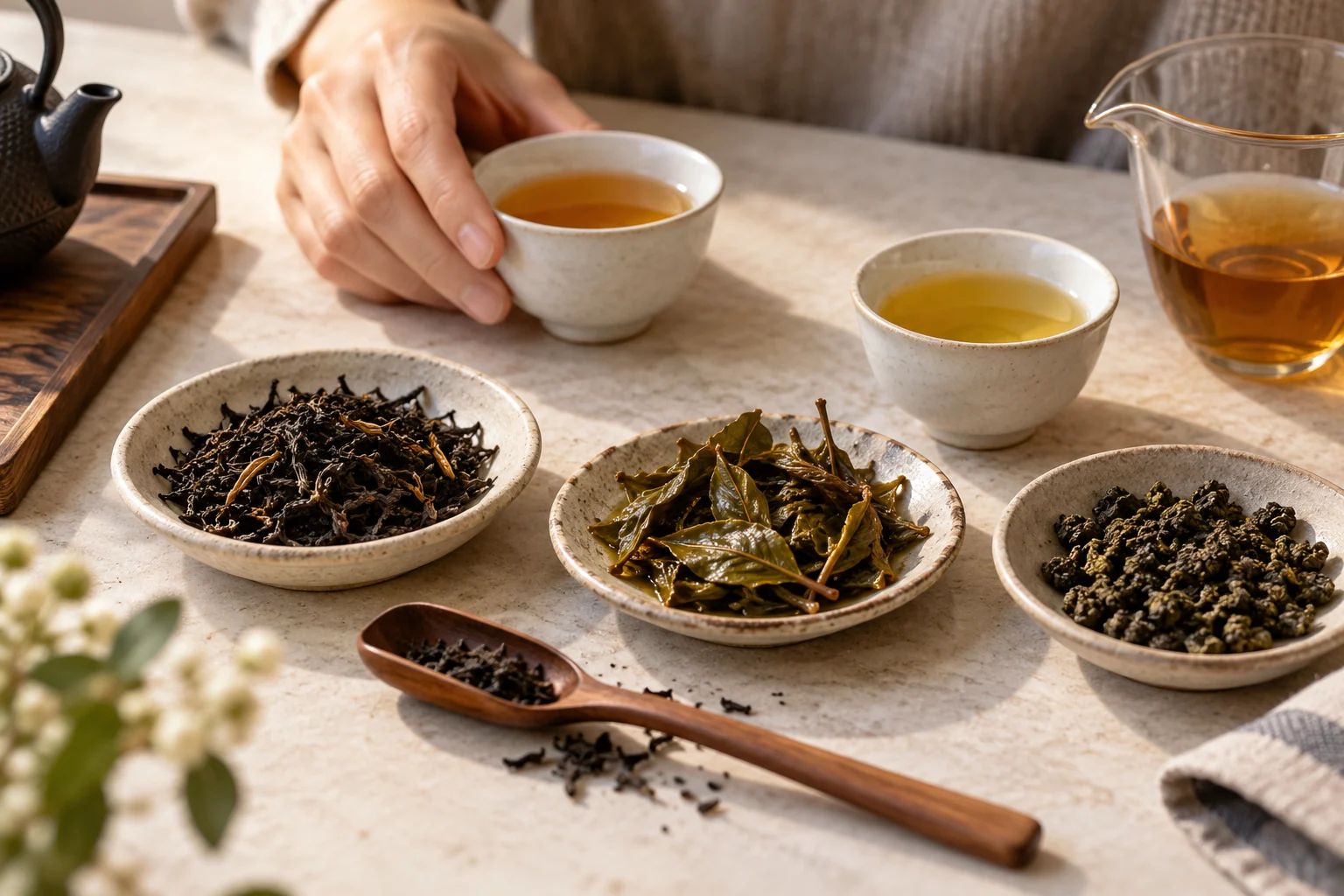
What changes is processing. Green tea leaves are heated relatively early after harvest, limiting oxidation. Oolong is partially oxidized, while black tea is more fully oxidized.
Those processing choices change aroma, flavor and the profile of polyphenols in the finished tea.
If you want to explore tea style rather than health claims, see What Is Oolong Tea? A Guide to Styles, Flavor, and Brewing and Black Tea Varieties Explained: Assam, Darjeeling, Ceylon & More.
What do green-tea catechins actually mean?
Catechins are a family of plant polyphenols. The one most often discussed in green-tea research is epigallocatechin gallate, usually shortened to EGCG.
It is reasonable to say green tea is a dietary source of catechins. It is not reasonable to jump from “contains antioxidants” to “prevents disease.”
Laboratory studies can show what a compound does in cells or animals. Human health claims need human evidence, and the dose delivered in an extract capsule can be very different from the dose in brewed tea.
That distinction becomes especially important when supplement research is used to market ordinary tea — or when beverage research is used to imply that a high-dose extract must be even better.
Heart health: possible modest effects, not a treatment
Green tea has been studied for blood pressure, cholesterol and other cardiovascular risk markers.
The National Center for Complementary and Integrative Health notes that limited evidence suggests green and black tea may have beneficial effects on some heart-disease risk factors, including blood pressure and cholesterol.
A 2023 NCCIH evidence summary describes several meta-analyses in which green tea was associated with small reductions in total and LDL cholesterol. A separate randomized-trial meta-analysis of green-tea supplementation also reported modest improvements in several lipid and glycemic markers.
But not every review finds the same effect. A systematic review of short-term tea-consumption trials found no significant changes in blood pressure or lipids and rated the evidence low to moderate because many trials were small and short.
So the appropriate wording is possible modest improvement in some risk markers, not “green tea protects your heart” and certainly not “green tea treats high cholesterol.”
Weight loss: one of the most overhyped claims
Green tea is routinely marketed as a fat burner.
NCCIH states that green tea has not been shown to be effective for weight loss.
Some research on catechin/caffeine combinations or extracts has found small changes in body weight, but results depend on the preparation, dose and population, and the effects are not large enough to justify treating green tea as a weight-loss therapy.
A cup of unsweetened green tea can still be a useful low-calorie beverage. That is a practical dietary feature, not proof of a special fat-burning effect.
Cancer claims go beyond the evidence
Green tea compounds have shown interesting effects in laboratory and animal research, which helped generate decades of cancer-prevention research.
Human evidence has been much less clear.
NCCIH says the results of epidemiologic and clinical studies on green tea and cancer have been inconclusive.
That means green tea should not be promoted as a cancer-prevention strategy and should never be presented as cancer treatment.
Enjoying tea can be part of everyday life during cancer prevention or care, but the beverage does not replace screening, vaccination, smoking cessation, treatment or any other evidence-based medical strategy.
What about inflammation and “antioxidant status”?
Newer randomized-trial meta-analyses continue to investigate green-tea supplementation and biomarkers associated with oxidative stress and inflammation.
A 2025 systematic review found improvements in several oxidative-status markers but no significant effect on several major inflammatory markers, including CRP, IL-6 and TNF-alpha.