Loose leaf tea is not automatically better than every tea bag, and tea bags are not automatically low quality. The real difference comes from the tea inside, the size of the leaf particles, how much room the leaves have to expand, the bag material and shape, the amount of tea used, and how you brew it.
Loose leaf often gives you more control, more room for whole leaves to open, easier re-steeping, and access to a much wider range of specialty teas.
Tea bags usually win on speed, portability, portioning, and cleanup.
If your only question is “Which one tastes better?” the most accurate answer is: compare the actual tea, not just the package.
The biggest misconception: tea bags are not all the same
The phrase “tea bag” can describe very different products.
One bag might contain very fine particles designed to extract quickly in a mug. Another might be a large pyramid sachet filled with visibly larger leaves. A third might contain herbs, spices, or fruit rather than Camellia sinensis at all.
Likewise, “loose leaf” can mean carefully made whole leaves — or an average tea that simply happens to be sold outside a bag.
Packaging format alone does not guarantee quality.
What actually changes when tea is bagged?
Several physical variables can change the way tea brews.
Particle size
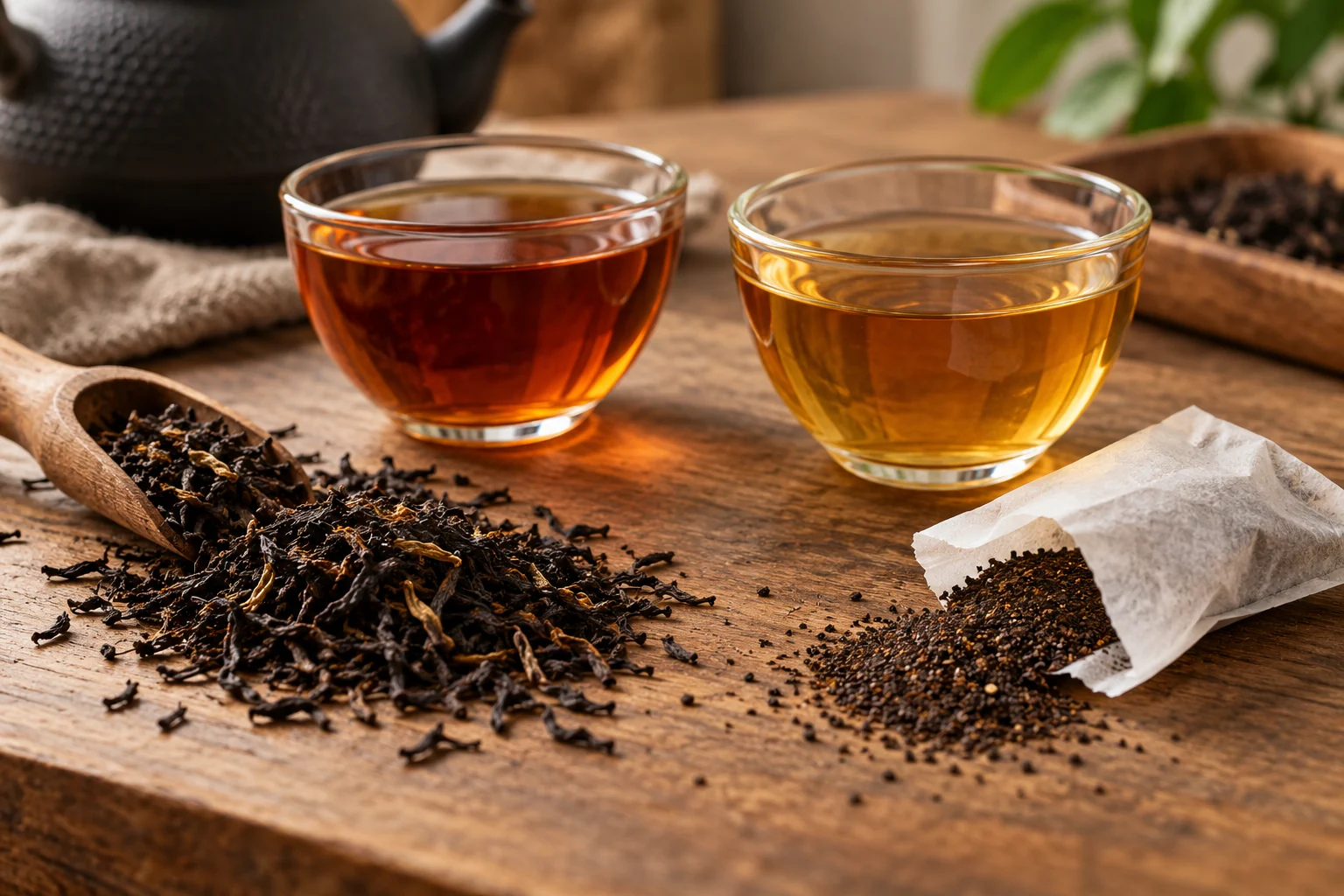
Smaller tea particles expose more surface area to water.
That generally means faster extraction.
Research on tea infusion has found that reducing particle size can increase infusion rate, and studies of bagged and loose teas show that finely fragmented material can release soluble compounds quickly during early brews.
This is why a conventional breakfast tea bag can produce a strong cup in a few minutes even though the leaf pieces look much smaller than whole-leaf tea.
Small particles are not inherently “fake tea.” They simply behave differently in water.
Space inside the bag
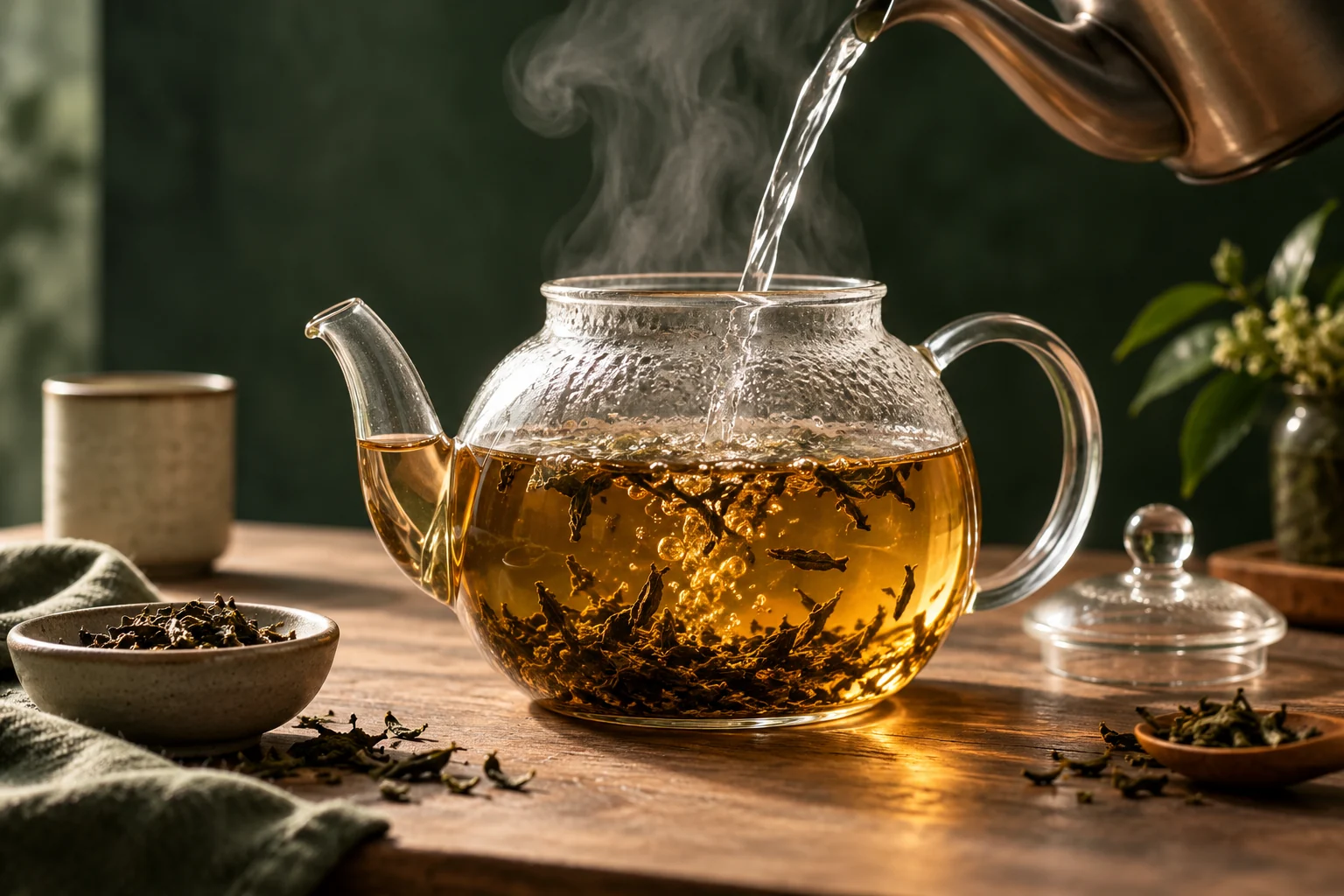
Tea leaves absorb water and swell.
A bag that is packed tightly can restrict movement and reduce the effective contact between leaf and water. A larger bag or more open shape can give the leaf more room to expand.
A 2017 study comparing tea-bag designs found that loading, bag geometry, particle size, water temperature, and agitation all influenced swelling and infusion kinetics.
That means “bag vs. loose” is not the only variable. The design of the bag matters too.
Bag material
Paper, cellulose-based materials, nylon, polypropylene-containing materials, and other constructions do not behave identically.
Bag permeability can affect how water moves through the tea. Material also matters if compostability or plastic use is important to you.
Do not assume a tea bag is plastic-free because it looks like paper. Check the manufacturer’s packaging information if that matters to your buying decision.
Does loose leaf tea taste better?
Often, but not automatically.
Loose leaf has several structural advantages for flavor exploration:
- larger leaves can unfurl freely
- you can adjust the dose precisely
- you can watch how the leaf changes
- many whole-leaf teas support multiple infusions
- specialty producers can sell leaf styles that would not fit comfortably into a conventional small bag
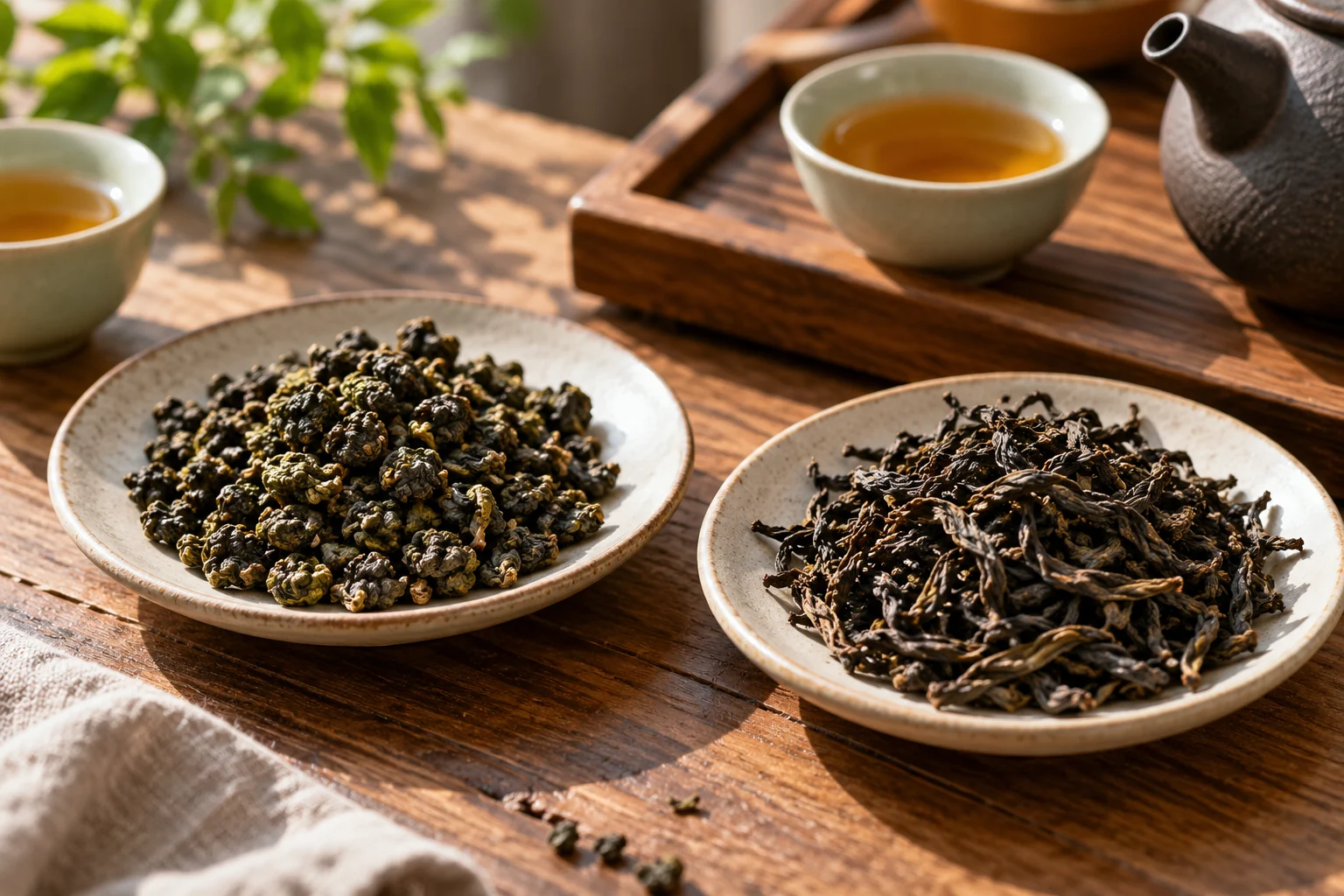
That makes loose leaf especially useful for oolong, many Chinese teas, high-quality black teas, and other teas where leaf shape and repeated infusions are part of the experience.
But a well-made bagged tea can still taste excellent.
And because small particles extract rapidly, some bagged teas can produce a stronger first infusion than a larger-leaf tea under the same short brewing conditions.
Research on commercial green teas, for example, found that bagged teas could show greater first-brew antioxidant extraction while loose-leaf teas often gave more across repeated infusions. That is a useful reminder that “fast extraction” and “high quality” are not the same question.
Why loose leaf is often better for learning tea
Loose leaf exposes more of the variables you can control.
You can see:
- whether the leaf is whole, broken, rolled, twisted, or powdered
- how much you are using
- how quickly it opens
- how it smells dry and wet
- how the liquor changes across multiple infusions
That makes loose leaf a strong format for learning the differences among tea styles.
Our oolong guide is a good example: many oolongs are especially interesting when the leaves can open fully and be infused several times.
Loose leaf also makes it easier to apply the tasting habits in our upcoming tea-tasting guide.
Why tea bags are still useful
Convenience matters.
Tea bags are useful when you:
- want one pre-portioned serving
- are making tea at work or while traveling
- do not have a strainer or infuser
- want minimal cleanup
- prefer a fast, predictable brew
- are serving many people who do not want to manage loose leaf
A practical tea habit you actually maintain can be more valuable than an elaborate setup you never use.
There is no prize for making every cup difficult.
Whole leaf, broken leaf, fannings, and dust
Tea grading terms can become confusing because they are not universal quality scores.
In broad terms:
- whole or larger leaf teas retain larger pieces
- broken leaf teas contain smaller fragments
- fannings and dust are finer particles
Smaller particles generally extract more quickly because more surface area is exposed to water.
That fast extraction can be exactly what a breakfast tea bag is designed to deliver.
But the tradeoff is that very fine particles can become strong, bitter, or drying quickly if brewed too aggressively.
Larger leaves often extract more gradually and can be easier to explore over several steeps.
Instead of treating one grade as automatically superior, ask whether the grade makes sense for the intended brewing style.
Do tea bags contain less caffeine?
Not necessarily.
The caffeine in the cup depends on the tea itself and how it is prepared.
Research has shown that cultivar, manufacturing, leaf grade, dose, water temperature, steep time, agitation, bag construction, and other variables can all affect the composition of the finished infusion.
A finely cut tea bag can extract caffeine quickly because of its surface area.
So “bagged” does not reliably mean “lower caffeine,” and “loose leaf” does not reliably mean “higher caffeine.”
If caffeine matters to you, use product-specific information where available rather than relying on packaging format.
What about antioxidants and “healthier” tea?
Be careful with simple claims here.
Studies do show that particle size, brewing conditions, and bag design can change how quickly compounds are extracted.
But that does not support a blanket statement that every loose-leaf tea is healthier than every tea bag.
For example, research comparing commercial green teas found no significant difference in total infusion antioxidant capacity between the loose and bagged groups it tested, even though the extraction pattern differed across successive brews.
The tea, dose, processing, and brewing method matter more than a simplistic packaging label.