
Good iced tea is not just hot tea with ice dropped into it. The easiest reliable method is to brew the tea slightly stronger than you would for a hot cup, steep it for the correct amount of time, and account for the dilution that happens when the hot tea hits ice.
For a quick glass, use roughly twice your normal tea strength, steep according to the tea type, and pour the finished tea over a full glass of ice. For a larger batch, make a concentrated hot brew and dilute it with cold water or ice after steeping.
The quick iced tea method
For about 16 ounces of finished iced tea:
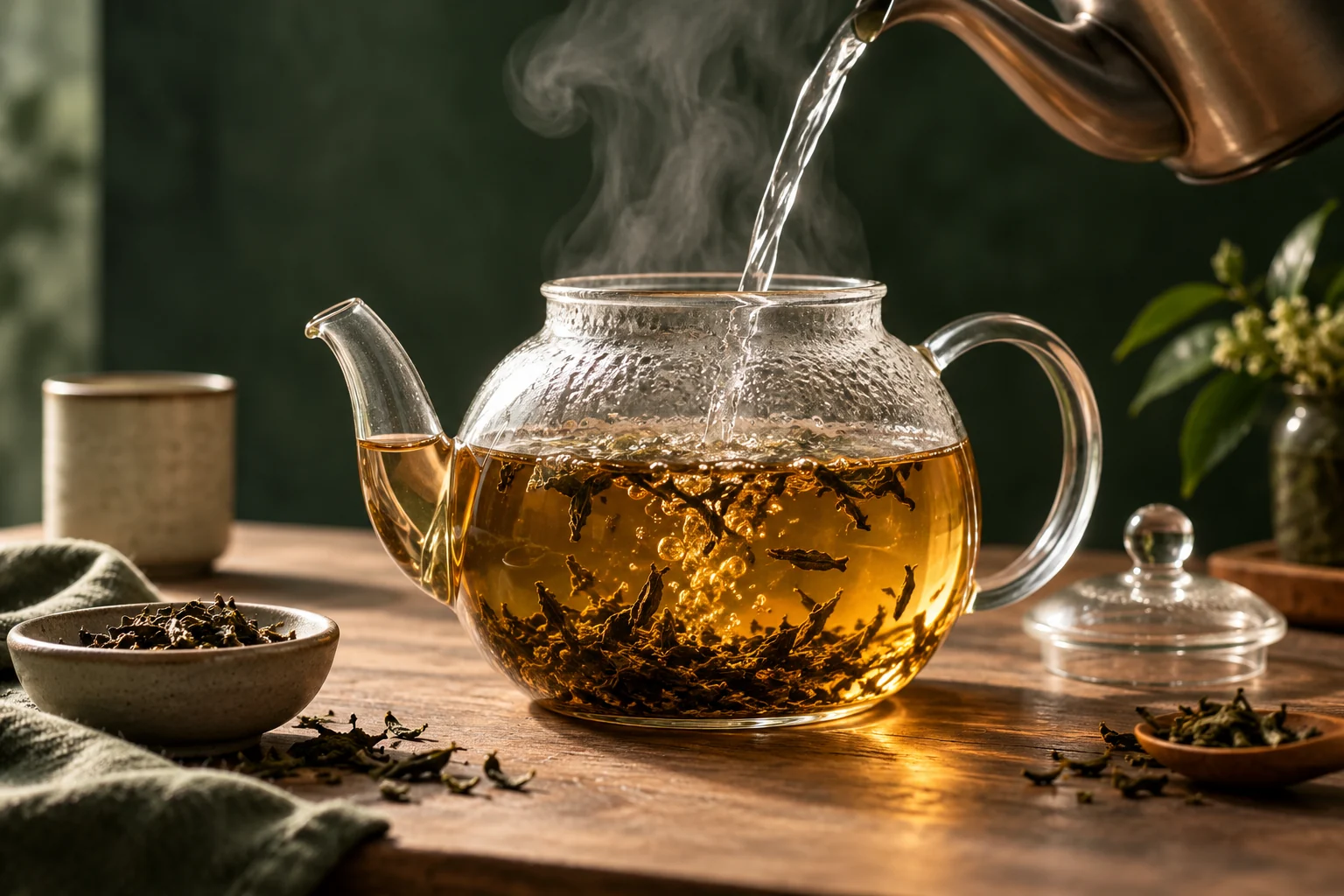
- Heat 8 ounces of fresh water.
- Add enough tea for roughly 16 ounces of normal hot tea. For bagged tea, that usually means two standard tea bags; for loose tea, use the producer's recommended dose and double it.
- Steep for the tea's normal recommended time. Do not simply leave the leaves in longer to make the tea stronger; over-steeping can add harshness and astringency.
- Remove the tea leaves or bags.
- Fill a 16-ounce glass with ice and pour the hot concentrated tea over it.
- Taste before adding sweetener, citrus, milk, herbs, or fruit.
The Tea Association of the U.S.A. has long recommended making iced tea stronger than hot tea to account for dilution from ice. Its foodservice guidance also uses a concentrated brew before adding cold water or ice.
Why stronger tea works better than longer steeping
Tea strength and steep time are related, but they are not the same thing.
Using more leaf increases the amount of flavor available to extract. Extending the steep far beyond the recommended time can extract more bitter and drying compounds along with the flavor you wanted. If your iced tea repeatedly tastes thin, increase the amount of tea before you dramatically increase the steep time.
This is especially useful when you are flash-chilling tea over ice because part of the finished drink is melted ice.
Start with the right water temperature
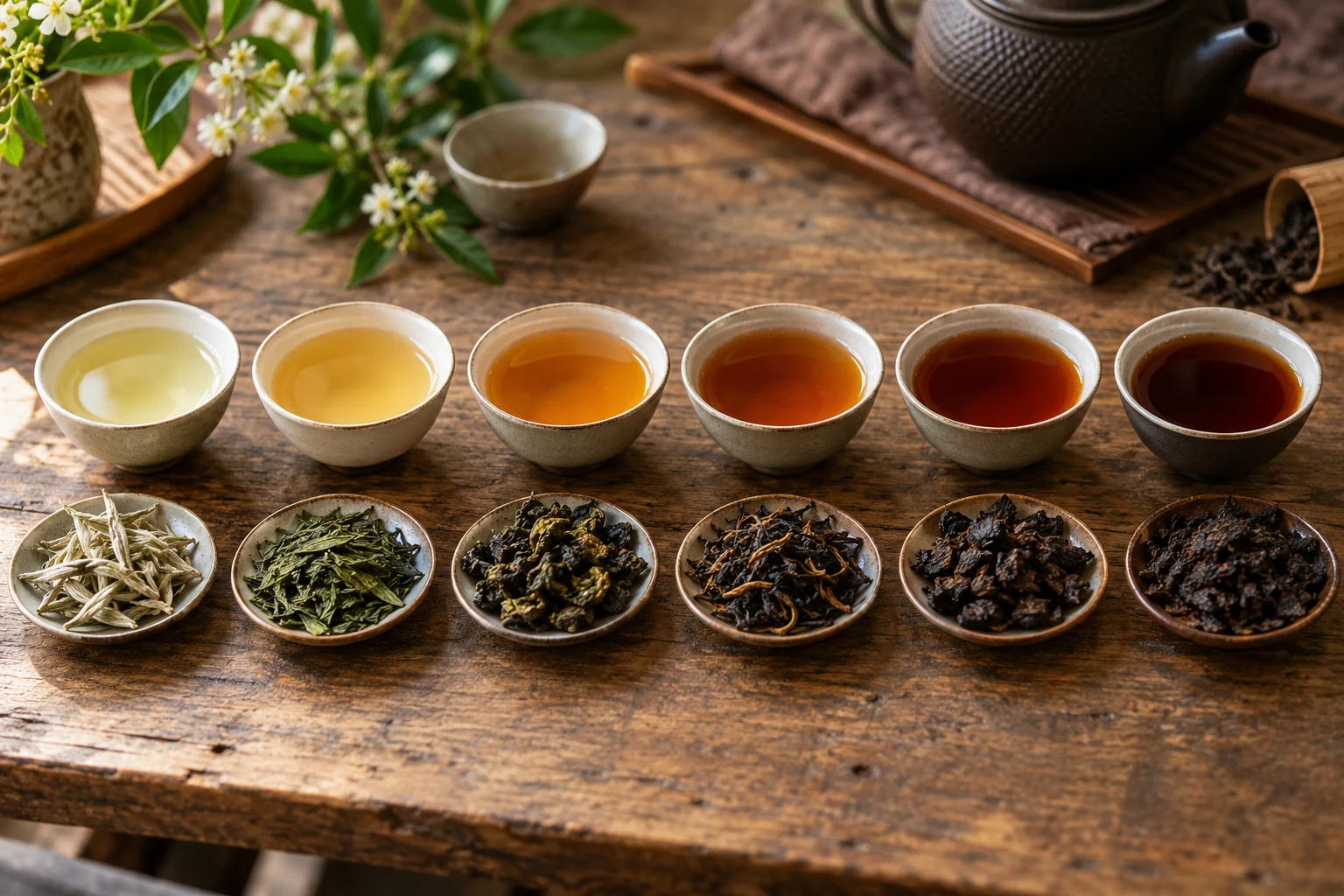
Different tea styles respond differently to heat. A simple starting point is:
| Tea style | Starting water approach |
|---|---|
| Black tea | Near boiling |
| Pu-erh | Near boiling |
| Herbal/tisane | Boiling or near boiling, following package directions |
| Oolong | Hot but often below a full boil, depending on the tea |
| Green tea | Cooler than black tea |
| White tea | Cooler than black tea |
Producer instructions should take priority because processing style and leaf shape can change the ideal temperature. Consumer Reports similarly recommends matching water temperature to tea type rather than using boiling water for every tea.
How long should iced tea steep?
There is no single steep time for every tea, but 3 to 5 minutes is a common range for traditional black tea used in iced tea. Delicate green teas may need less time, while some herbal infusions need longer.
The practical rule is simple: use the tea maker's hot-brew instructions first, then change the dose if you need more strength for ice dilution.
A simple batch method for a pitcher
For a party-size batch, a concentrate is easier than trying to fit a full volume of hot water and ice into the same pitcher.
A traditional Tea Association approach uses roughly 8 to 10 tea bags in one quart of hot water, steeped for about 3 to 5 minutes, then combined with additional cold water or ice to reach the desired final volume.
You can scale that idea down for a smaller pitcher. The exact amount depends on the size and strength of your tea bags or loose-leaf tea, so taste and adjust rather than assuming every brand is identical.
How to keep iced tea from tasting cloudy, flat, or harsh
Do not squeeze the tea bags
Pressing or twisting saturated tea bags can push more fine particles and strong-tasting compounds into the brew. Remove them cleanly instead.
Use fresh water
Water is most of the drink. If your tap water tastes strongly of chlorine or minerals, filtered water can make the tea taste cleaner.