A warm drink can be part of a calming routine. That does not mean every “stress-relief tea” has been proven to reduce anxiety or treat chronic stress.
The most useful way to think about tea for relaxation is to separate three different things:
- the ritual itself — slowing down, sitting, smelling and sipping
- caffeine exposure — which can work against relaxation for some people
- specific herbs — which each have their own evidence and safety questions
Once those are separated, choosing an evening tea gets much easier.
The short answer
For a low-stimulation evening routine, start with a caffeine-free herbal infusion you enjoy.
Chamomile is a common option and is generally safe in normal tea amounts for most people, but clinical evidence for insomnia and anxiety is limited and inconsistent. Passionflower has a small amount of preliminary research for anxiety and sleep, but conclusions are not definite. Valerian is widely marketed for relaxation, yet evidence for anxiety and chronic insomnia remains insufficient.
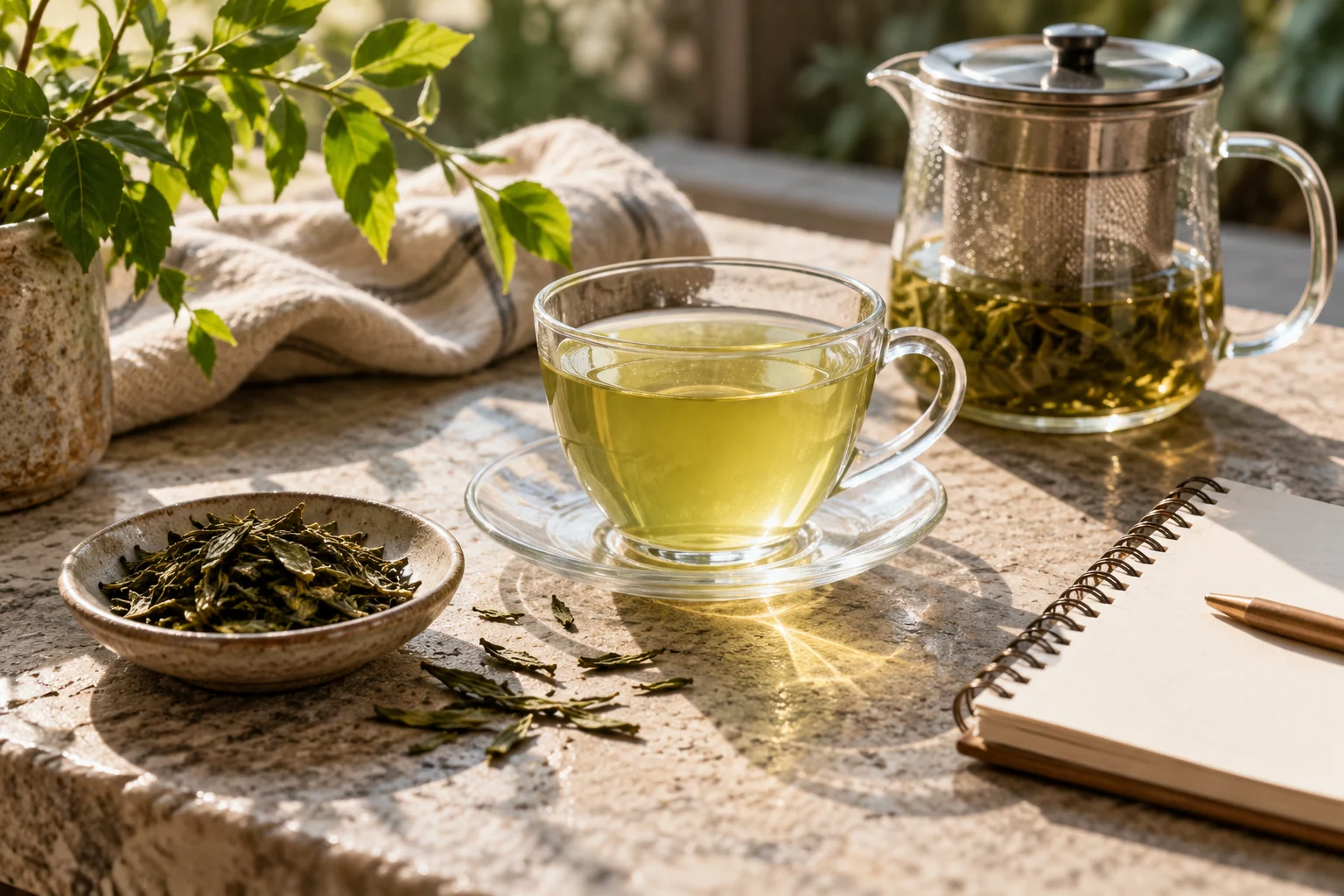
Meanwhile, green, black, white and oolong tea all come from Camellia sinensis and naturally contain caffeine unless they have been decaffeinated.
So the strongest practical recommendation is not “drink this herb to cure stress.” It is: choose a caffeine level and ritual that make it easier to wind down, without treating tea as therapy.
Relaxation is not the same as anxiety treatment
Feeling calmer after sitting down with a warm cup can be real and worthwhile.
But a subjective calming ritual is not the same thing as treating an anxiety disorder, panic attacks, trauma-related symptoms or severe chronic stress.
This article focuses on ordinary beverage choices and routines. Persistent or worsening anxiety belongs in evidence-based care, not a tea shopping list.
That boundary also keeps the recommendations more honest. A tea does not need to be medicine to be enjoyable or useful.
Start by deciding whether you want caffeine
“Tea” can mean two very different categories.
True tea comes from Camellia sinensis and includes:
- green tea
- black tea
- white tea
- oolong tea
- pu-erh and other processed styles
These naturally contain caffeine unless decaffeinated.
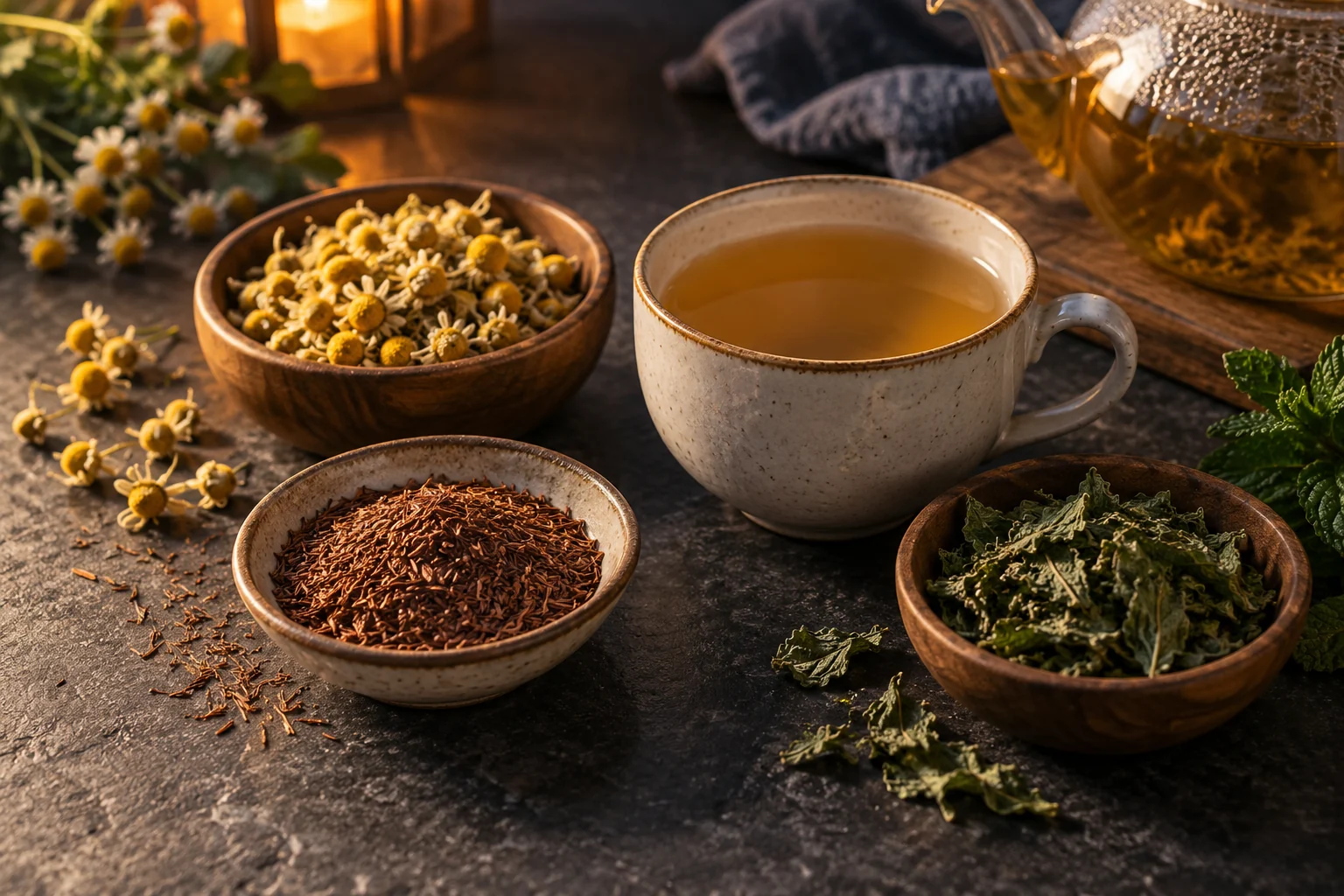
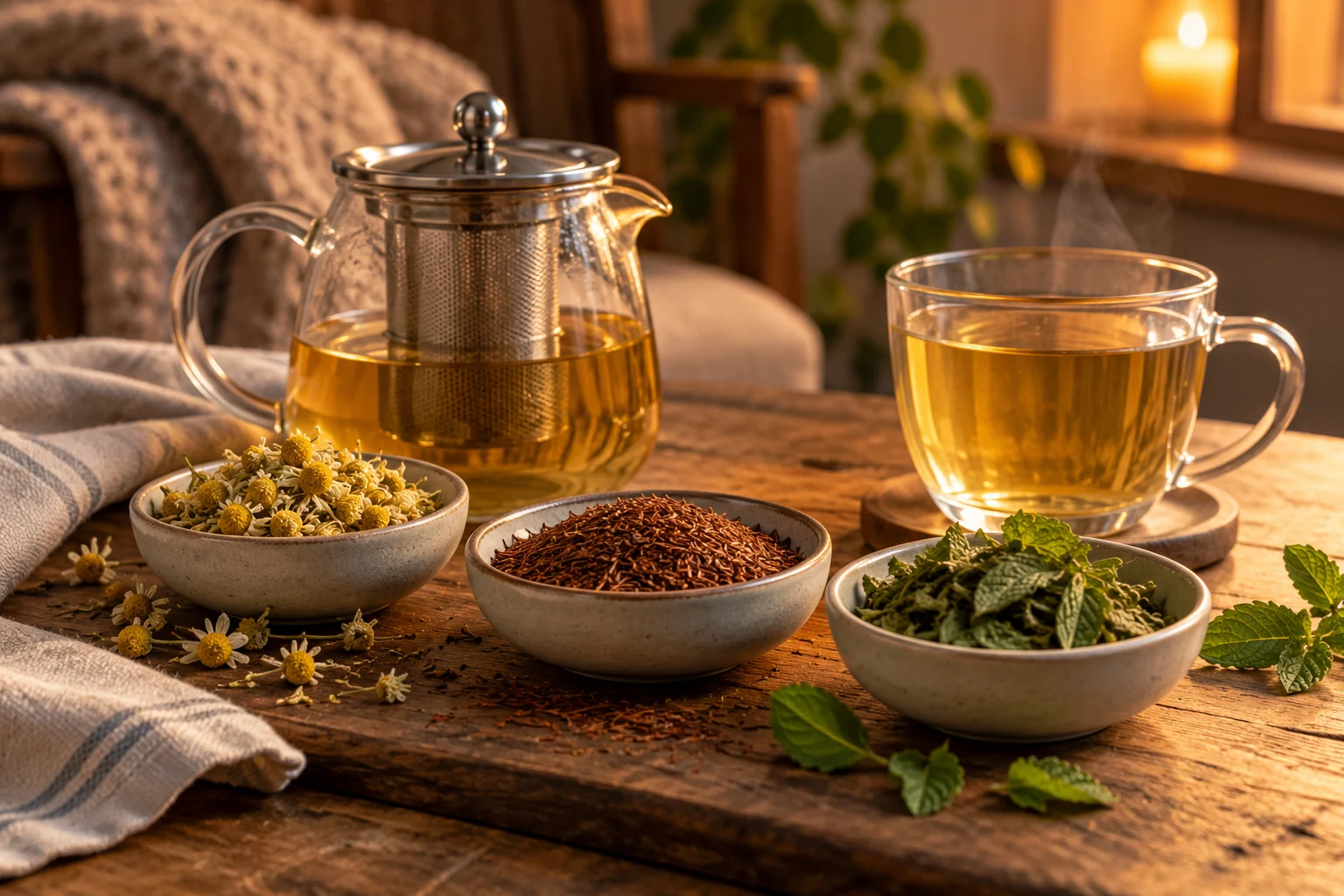
Herbal tea is an everyday name for infusions made from other plants, such as chamomile, peppermint, rooibos or passionflower. Many are naturally caffeine-free, although blends can include caffeinated ingredients, so the label still matters.
If your goal is to wind down late in the day, caffeine-free is often the simplest starting point.
For a deeper sleep-focused discussion, see Tea for Better Sleep? An Evidence-Based Evening Guide.
Chamomile: reasonable for the ritual, evidence still limited
Chamomile is one of the most familiar evening infusions.
The National Center for Complementary and Integrative Health says chamomile is likely safe in amounts commonly found in tea and food. Some preliminary studies of chamomile extracts or supplements suggest possible benefit for generalized anxiety disorder, but the evidence is not conclusive.
That supplement-versus-tea distinction matters.
A 2019 systematic review and meta-analysis found mixed findings across anxiety, sleep quality and insomnia outcomes. The review found no significant effect for state anxiety and noted very limited insomnia evidence, although some outcomes favored chamomile.
So the defensible takeaway is:
- chamomile can be a pleasant caffeine-free evening drink
- research is interesting but not strong enough to call chamomile tea an anxiety or insomnia treatment
- evidence from concentrated extracts should not automatically be applied to a normal cup
Chamomile safety
Chamomile can cause allergic reactions, especially in people who react to related plants such as ragweed, chrysanthemums, marigolds or daisies.
NCCIH also notes reported or theoretical interactions with medicines including warfarin and sedatives.
That does not make ordinary chamomile tea dangerous. It means “natural” is not the same as interaction-free.
Passionflower: promising, but the research base is small
Passionflower is often sold in sleep and relaxation blends.
NCCIH says a small amount of research suggests oral passionflower might reduce some anxiety symptoms and might improve total sleep time in adults with insomnia, but the evidence is limited and conclusions are not definite.
The agency also notes that passionflower may cause drowsiness, dizziness and confusion and may interact with anesthesia or other medications used around surgery.
That makes passionflower a good example of why an herbal ingredient deserves its own evidence and safety review rather than being grouped into a vague “calming herbs” category.
If you choose it as a tea, treat it as a beverage with limited evidence — not as a substitute for anxiety treatment or a prescription sleep aid.
Valerian: popular marketing, weak reason to promise relaxation
Valerian appears in many nighttime blends.
NCCIH says there is not enough evidence to draw conclusions about valerian for anxiety, stress or several other conditions. Its evidence for chronic insomnia is also not convincing enough to support it as a proven sleep treatment.
Valerian can also cause side effects such as headache, stomach upset, mental dullness, uneasiness or vivid dreams. Long-term safety is uncertain.
That does not mean nobody can enjoy a blend containing valerian. It means a product label saying “relax” is not proof that the ingredient has a reliable clinical effect.
Peppermint: choose it for flavor, not for anxiety claims
Peppermint infusion is naturally caffeine-free and can be refreshing in the evening if mint agrees with you.
Its strongest role here is sensory: aroma, warmth and a clear shift away from another caffeinated drink.